

Back to Services
Service · Surgery
Foot and Ankle Surgeon in Timonium, MD
Most foot and ankle problems don’t require surgery—and that’s exactly where we start. Dr. Jordan R. Stewart, DPM, is board certified in Foot Surgery by the American Board of Foot and Ankle Surgery and has been treating patients since 2006. Our approach is to begin with the most appropriate conservative treatment whenever possible.
Surgery is recommended only when it offers the best opportunity to relieve pain, restore function, or prevent further damage. When surgery is the right treatment, you’ll receive a clear explanation of your diagnosis, treatment options, expected recovery, and realistic outcomes so you can make an informed decision with confidence.
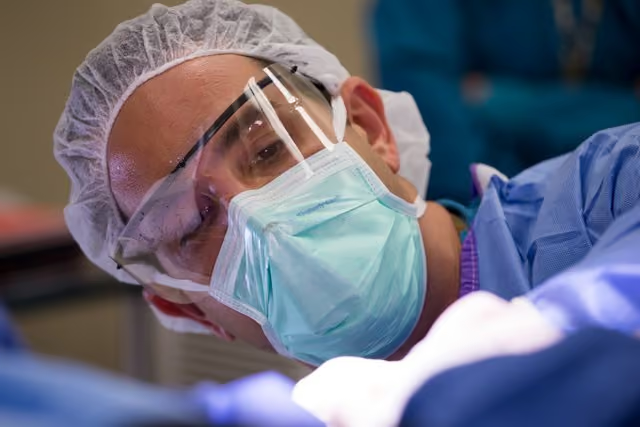
Do I really need foot or ankle surgery?
Often, the answer is no—at least not right away. Many foot and ankle conditions, including bunions, hammertoes, arthritis, tendon disorders, and ankle instability, can often be managed successfully with conservative treatment. Surgery is recommended only when it offers the best opportunity to relieve pain, restore function, or prevent further damage. Before making any recommendation, we’ll explain your diagnosis, review your imaging, discuss all appropriate treatment options, and answer your questions so you can make an informed decision.
Bunion Surgery
Traditional and minimally invasive
Jump to section →
Hammertoe Surgery
Straighten a rigid, painful toe
Jump to section →
Ankle Ligament Reconstruction
Stabilize a chronically unstable ankle
Jump to section →
Fractures and Minor Procedures
Fracture repair, soft tissue release, tendon repair
Jump to section →
In-Office Procedures
Ingrown nails, foreign body removal, injections, dermal fillers
Jump to section →
Foot and ankle surgery

Bunion surgery, including minimally invasive options
There is no one-size-fits-all bunion procedure. The right operation depends on the severity of your bunion, joint stability, arthritis, X-ray findings, activity level, and treatment goals.
After a comprehensive examination and imaging, our doctors recommend the procedure that offers the best opportunity to relieve pain, restore function, and provide a lasting correction. Treatment may include a bunionectomy, osteotomy, Lapidus procedure, joint fusion, or minimally invasive bunion surgery (MIS). The goal is to select the right procedure for your condition—not simply the newest technique or the smallest incision.
After a comprehensive examination and imaging, our doctors recommend the procedure that offers the best opportunity to relieve pain, restore function, and provide a lasting correction. Treatment may include a bunionectomy, osteotomy, Lapidus procedure, joint fusion, or minimally invasive bunion surgery (MIS). The goal is to select the right procedure for your condition—not simply the newest technique or the smallest incision.
Bunion Surgery Options
 Bunionectomy. Removes the prominent bump but does not correct the underlying bone deformity. It is appropriate only for carefully selected patients.
- Osteotomy. Realigns the bone by making a precise cut and securing it with specialized fixation to restore alignment while preserving joint motion.
- Lapidus Procedure.Corrects bunions associated with instability of the first tarsometatarsal joint and provides a durable correction for appropriately selected patients.
- Minimally Invasive Surgery (MIS). Uses specialized instruments through several small incisions to correct the deformity. For appropriately selected patients, MIS may reduce soft tissue disruption, but it is not the best option for every bunion.
Hammertoe surgery
Many hammertoes can be managed successfully for years with shoe modifications, padding, splints, orthotics, and other conservative treatments. Surgery is recommended only when the deformity becomes rigid, painful, or continues to limit your daily activities despite appropriate non-surgical care.
After a comprehensive examination and imaging, our doctors recommend the procedure that offers the best opportunity to relieve pain, straighten the toe, and improve function. Depending on your diagnosis, treatment may involve releasing or balancing tendons and ligaments, realigning or removing a small portion of bone, or stabilizing the toe with temporary or permanent fixation. When surgery is needed, hammertoe correction may involve soft tissue procedures, bony procedures, or a combination of both to restore a more natural toe position.
Ankle surgery and reconstruction
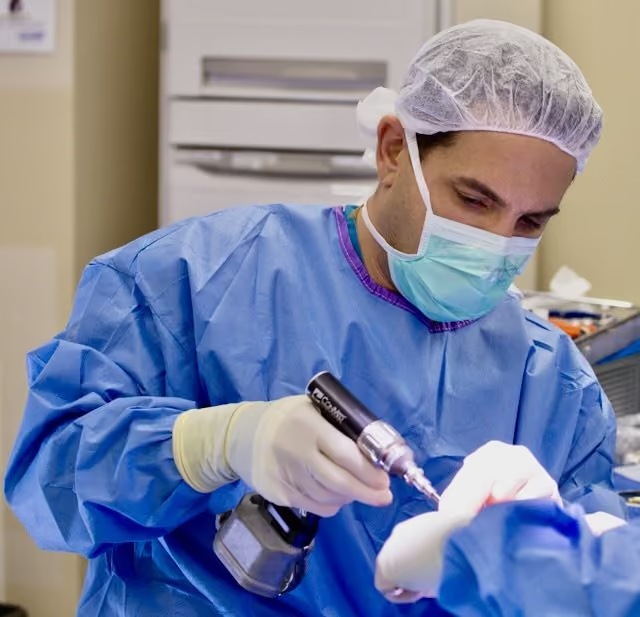
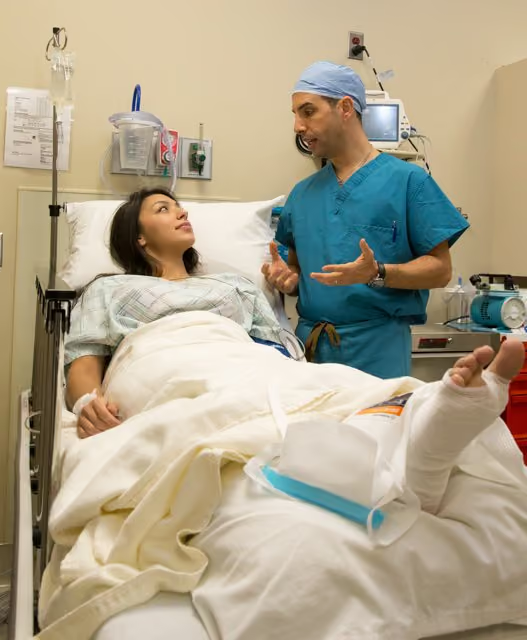
Many ankle problems can be treated successfully with bracing, physical therapy, activity modification, injections, or other conservative treatments. Surgery is recommended only when instability, tendon injury, arthritis, fractures, or other conditions continue to cause pain, repeated giving way, or loss of function despite appropriate non-surgical care.
After a comprehensive examination and imaging, our doctors recommend the procedure that offers the best opportunity to relieve pain, restore stability, and improve function. Depending on your diagnosis, treatment may include ligament repair or reconstruction, tendon repair or reconstruction, cartilage restoration procedures, fracture fixation, or other reconstructive techniques. When surgery is needed, the procedure is designed to restore stability, improve function, and help prevent further joint damage.
Fractures and minor procedures
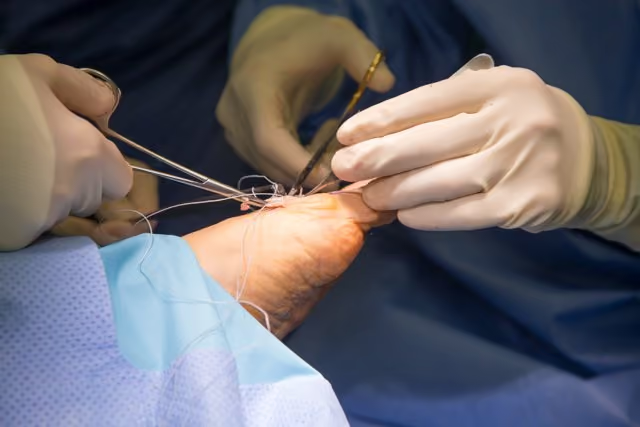
Many foot and ankle fractures heal successfully with conservative treatment such as a walking boot or cast. When a fracture is displaced, unstable, involves a joint, or is unlikely to heal properly without surgery, surgical fixation may be recommended to restore alignment and promote healing.
We also perform a variety of minor foot and ankle procedures, including removal of soft tissue masses, gastrocnemius recession, plantar fasciectomy, tendon release procedures, and other soft tissue procedures. Treatment is based on your diagnosis, symptoms, and individual needs.
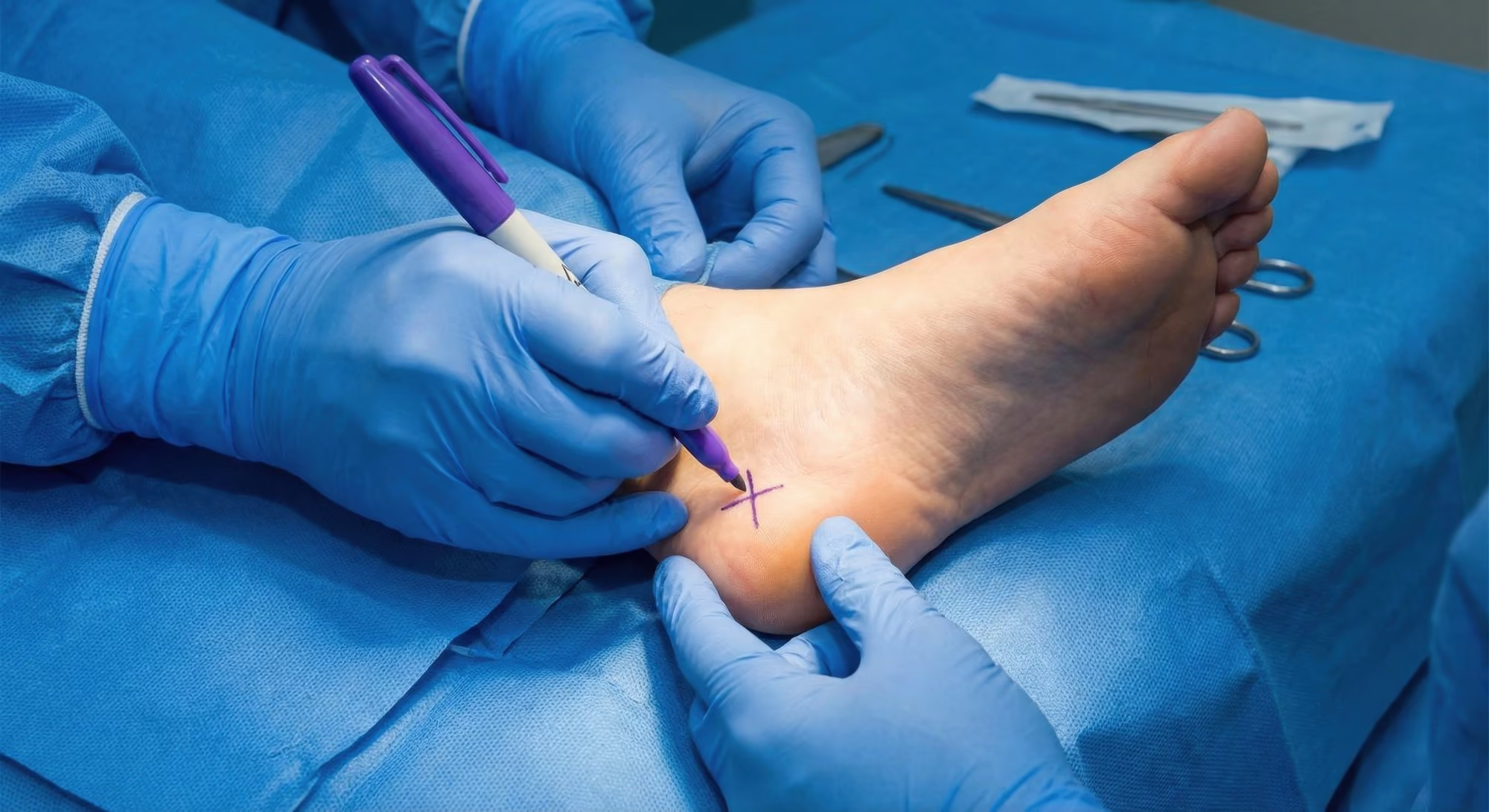
In-Office procedures
Many foot and ankle conditions can be treated safely and effectively in the office without the need for an operating room. After a comprehensive examination and diagnosis, our doctors recommend the procedure that offers the best opportunity to relieve pain, restore function, or prevent the problem from recurring.
Depending on your diagnosis, treatment may include permanent treatment of ingrown toenails, plantar wart treatment, removal of foreign bodies or soft tissue masses, therapeutic injections, dermal fillers for plantar fat pad atrophy, tendon and other soft tissue procedures, and other office-based treatments when appropriate. Every procedure is selected based on your diagnosis, symptoms, activity level, and treatment goals to help relieve pain, improve function, and restore mobility.
Recovery
What does recovery from foot and ankle surgery look like?
Recovery from foot and ankle surgery depends on your diagnosis, the procedure performed, your overall health, and how well you follow your postoperative instructions. Some procedures allow walking in a surgical shoe almost immediately, while others require a period of protected weight-bearing or non-weight-bearing to allow proper healing.
Before surgery, Dr. Stewart will review your expected recovery, activity restrictions, and return-to-work, exercise, or sports timeline so you know what to expect before making a decision. Every recovery plan is individualized based on your procedure and treatment goals.
Procedure type
Weight-bearing status
Typical Recovery*
In-office procedures
Usually immediate
2–4 weeks
Soft tissue procedures
Often early protected weight-bearing
Ranges from 2–12 weeks
Minimally invasive (MIS)
Varies by procedure
3–6 months
Reconstructive foot and ankle surgery, fractures, fusions
Varies by procedure, but can require 6 weeks non weight-bearing
3–6 months with full recovery generally at 1 year
*Recovery timelines are general estimates and vary depending on the procedure performed, your overall health, bone and soft tissue healing, and rehabilitation. Your expected recovery will be discussed in detail before surgery.
Many patients are surprised to learn that not every foot or ankle surgery requires weeks of complete non-weight-bearing. Your postoperative plan depends on your diagnosis, the procedure performed, and your individual recovery.
Patient stories
“I took my recovery at a slow pace and Dr. Stewart gradually let me add activities. Exactly 4 months after my surgery, I completed a 100-mile bicycle ride… pain free!”
“I suffered from a painful bunion deformity for at least five years. I decided to undergo bunion surgery by Dr. Stewart — and I’m happy to say I am 100% pain-free.”
Foot and Ankle Surgery, Answered
When is foot or ankle surgery necessary?
Most foot and ankle conditions do not require surgery. Surgery may be recommended when appropriate conservative treatments have not provided sufficient relief, when a structural deformity cannot be adequately corrected without surgery, or when an injury such as an unstable fracture or complete tendon rupture is unlikely to heal properly without surgical treatment. The decision depends on your diagnosis, symptoms, activity level, and long-term goals.
What types of foot and ankle surgery do you perform?
Foot and ankle surgery can be used to treat a wide range of conditions, including bunions, hammertoes, painful arthritis, tendon and ligament injuries, fractures, chronic ankle problems, and other structural deformities. The specific procedure depends on the diagnosis and severity of the condition. When appropriate, minimally invasive surgical techniques may also be considered.
How long does it take to recover from foot or ankle surgery?
Recovery varies considerably depending on the procedure. Some patients can bear weight shortly after surgery, while more extensive procedures may require a period of immobilization and limited or non-weight-bearing. Bone healing commonly takes several weeks, while swelling, strength, and function may continue to improve for several months. Your surgeon will explain the expected recovery timeline before surgery and monitor your progress throughout recovery.
Will I need a cast, boot, or crutches after foot or ankle surgery?
It depends on the procedure and the amount of protection required for healing. Some patients may use a surgical shoe or walking boot, while others may require a splint, cast, crutches, or another assistive device. Weight-bearing instructions are individualized based on the surgery performed and how the tissues need to heal.
How do I know which foot or ankle surgery is right for me?
Choosing the appropriate procedure begins with an accurate diagnosis. Your evaluation may include a physical examination, X-rays, and, when necessary, advanced imaging such as an MRI or CT scan. Your surgeon will consider the underlying problem, severity of the condition, previous treatments, activity level, overall health, and your goals before recommending surgery. When more than one surgical option is appropriate, the advantages and disadvantages of each can be discussed with you.
How do I choose a foot and ankle surgeon?
Look for a surgeon with appropriate training, board certification, experience treating your specific condition, and a willingness to consider both surgical and non-surgical options. Dr. Jordan R. Stewart is Board Certified in Foot Surgery by the American Board of Foot and Ankle Surgery® (ABFAS). At Timonium Foot and Ankle Center, surgery is recommended when it is considered the most appropriate option for achieving a successful long-term outcome.
Get Started