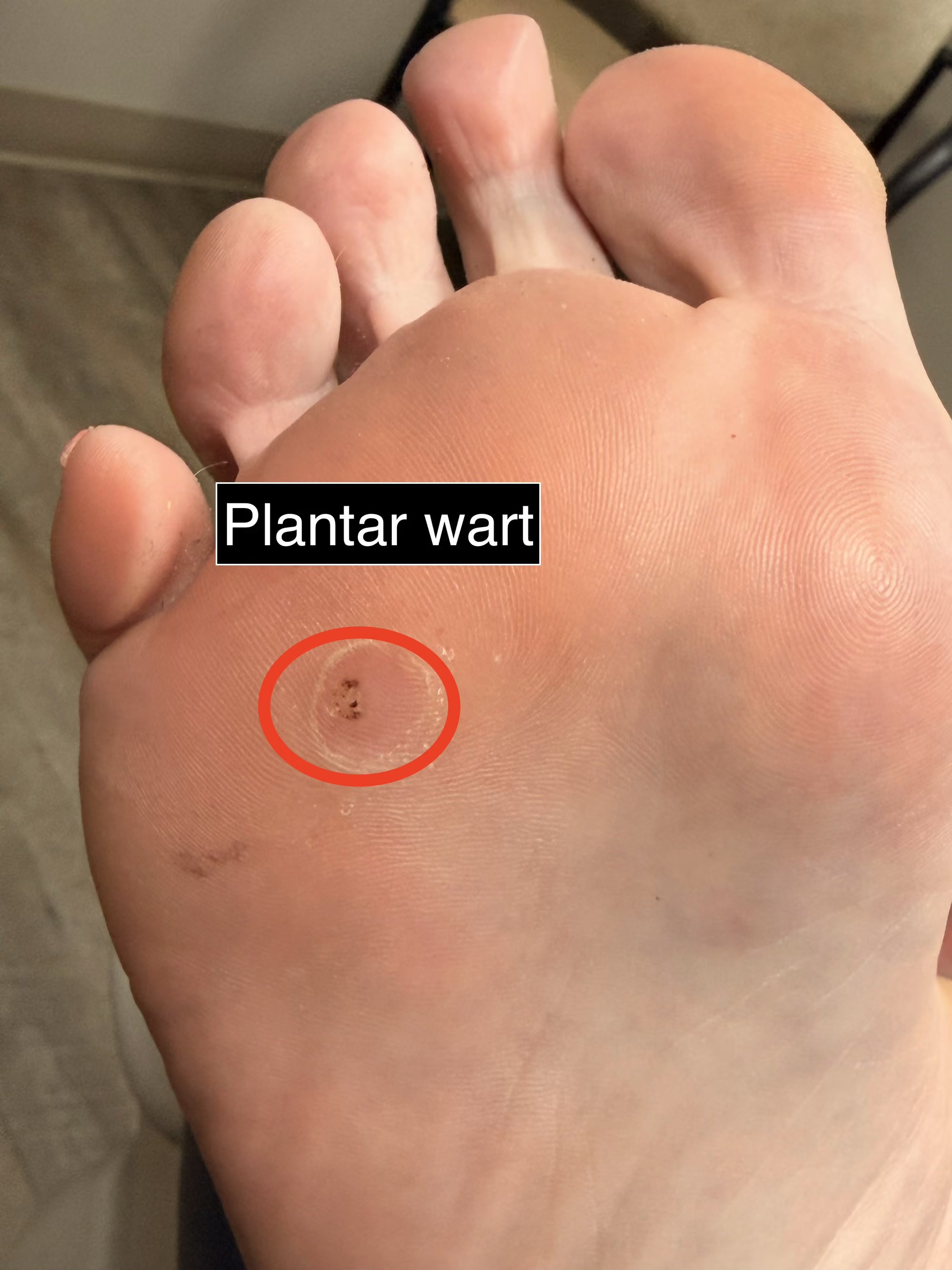


Plantar Warts
At Timonium Foot and Ankle Center, our doctors have extensive experience diagnosing and treating plantar warts and other skin lesions of the foot. Because corns, calluses, and other skin conditions can sometimes resemble a wart, treatment starts with an accurate diagnosis.
Warts can be persistent and may require multiple treatments before they completely resolve. Treatment depends on the size, location, number of warts, previous treatments, and how the lesion responds to therapy.
If you have a painful, persistent, or spreading skin lesion on your foot, call our office or request an appointment online. We’ll determine what’s causing the problem and recommend the most appropriate treatment.
What is a plantar wart?
A wart is a benign skin growth caused by infection with certain types of human papillomavirus (HPV). When a wart develops on the bottom, or plantar surface, of the foot, it is called a plantar wart.
The virus enters the outer layers of the skin, often through small breaks in the skin. Because plantar warts are exposed to pressure from standing and walking, they may grow inward beneath an overlying layer of thickened skin or callus and can become painful.
Warts are contagious and can spread to other areas of the foot or to other people. Some warts eventually resolve without treatment, while others persist, enlarge, multiply, or become increasingly painful.
What are the symptoms of a plantar wart?
- Loss of normal skin lines: The normal lines of the skin are typically interrupted as they cross the wart.
- Pinpoint black dots: Small blood vessels within the wart may appear as tiny black or dark-red dots.
- Thickened or callused skin: Plantar warts may develop beneath an area of thickened skin or callus.
- Pain: Warts on weight-bearing areas can become painful with standing, walking, or direct pressure.
- Flat or flesh-colored lesions: Some warts appear relatively flat and pale or similar in color to the surrounding skin.
- Rough or elevated growths: Other warts may have a rough surface or develop finger-like projections above the skin.
- Multiple or spreading lesions: Additional warts may develop near the original lesion or elsewhere on the foot.
How are plantar warts diagnosed?
Plantar warts are usually diagnosed through a comprehensive examination of the skin. Our doctors evaluate the appearance and location of the lesion, interruption of normal skin lines, presence of pinpoint blood vessels, overlying callus, and other characteristics that help distinguish a wart from a corn, callus, or other skin condition.
When the diagnosis is uncertain or a lesion has unusual features, additional evaluation or biopsy may be recommended to rule out another type of skin lesion.
What types of warts occur on the feet?
- Plantar warts: Plantar warts develop on the bottom of the foot. Because they occur on weight-bearing surfaces, pressure can cause them to become painful and develop an overlying callus.
- Mosaic warts: Mosaic warts occur when multiple plantar warts grow together in a cluster. They can cover a larger area and may be particularly difficult to treat.
- Common warts (verruca vulgaris): Common warts may occur on the toes, top of the foot, or other non-weight-bearing areas. They are often raised, well-defined growths with a rough surface.
How can plantar warts be prevented?
Warts are caused by a contagious virus and can spread through direct contact or contaminated surfaces.
- Avoid picking at warts: Picking, scratching, or cutting a wart can spread the virus to other areas.
- Avoid barefoot walking in communal areas: Wearing appropriate footwear in locker rooms, public showers, pool areas, and similar environments may reduce exposure to HPV.
- Avoid sharing personal items: Shoes, socks, nail instruments, and other items that contact an affected area should not be shared.
- Keep feet clean and dry: Good foot hygiene may help reduce conditions that allow the virus to enter damaged or irritated skin.
How are plantar warts treated?
Plantar warts can be challenging to eliminate and frequently require multiple treatments. The appropriate treatment depends on the size, number, location, depth, duration of the warts, previous treatment, and individual patient factors.
Consistency is important. Office treatment may be combined with treatment at home, and multiple treatment sessions may be necessary before the wart completely resolves.
Treatment options for plantar warts
- Debridement and topical acid treatment: Thickened skin overlying the wart may be carefully removed before application of a prescription-strength acid treatment.
- Prescription topical medication: Prescription-strength salicylic acid or other topical medications may be used at home between office treatments.
- Laser treatment: Laser therapy may be used to treat persistent plantar warts, particularly when other treatments have been unsuccessful.
- Combination therapy: Because warts can be resistant to treatment, different office and home therapies may be combined or changed depending on the response.
- Surgical excision: Surgical removal may be considered for selected persistent warts that have failed other treatments. Because excision can result in scarring and does not guarantee that the wart will not recur, it is generally reserved for appropriate cases.