


Plantar Fasciitis
At Timonium Foot and Ankle Center, our doctors have extensive experience diagnosing and treating plantar fasciitis and other causes of heel pain. Dr. Jordan Stewart, DPM has treated thousands of patients with plantar fasciitis and has experienced heel pain himself, giving him a personal understanding of how frustrating it can be when foot pain keeps you from staying active.
The good news is that plantar fasciitis is very treatable, and most cases can be treated without surgery. Our doctors start by making sure we understand exactly what’s causing your heel pain. From there, we develop a treatment plan based on your diagnosis, activity level, and goals.
If heel pain is keeping you from walking, exercising, or doing the things you enjoy, call our office or request an appointment online. We’re here to help get you comfortably back on your feet.
What is plantar fasciitis?
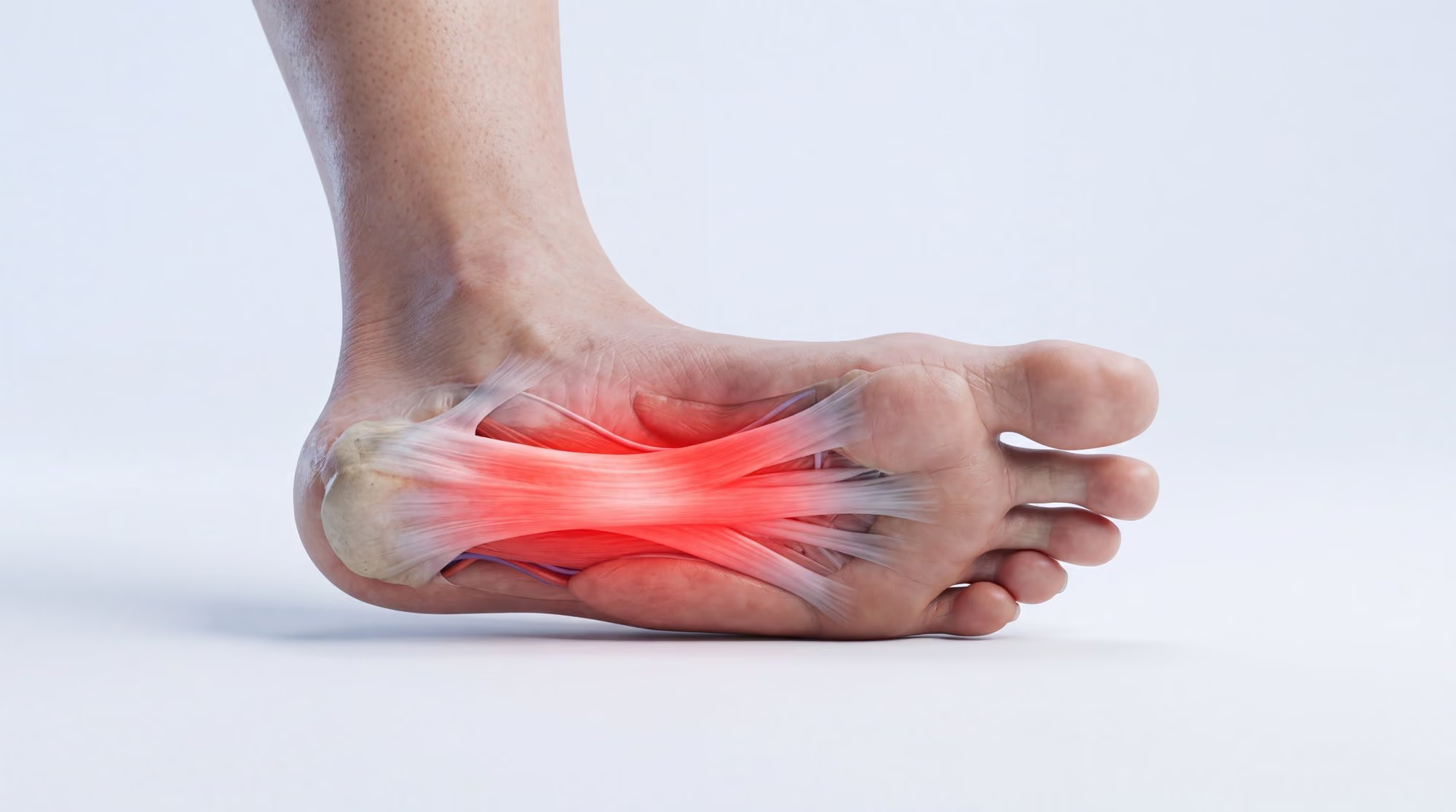
Plantar fasciitis is one of the most common causes of heel pain. It develops when the plantar fascia, the strong band of tissue supporting the arch of the foot, becomes irritated and undergoes repetitive stress.
Pain commonly occurs where the plantar fascia attaches to the heel bone and is often most noticeable with the first steps after rest. Because several other conditions can cause similar heel pain, an accurate diagnosis is important before treatment begins.
What are the symptoms of plantar fasciitis?
- Pain that is worse first thing in the morning or when starting walking after a period of rest.
- Pain tends to improve after walking, although in some case the pain stays constant.
- Sharp or burning pain in the heel sometimes described as though the heel is "being stabbed with a knife."
- Pain is commonly along the inside of the heel and along the arch of the foot and can sometimes be found on the front and outside of the bottom part of the foot
How is plantar fasciitis diagnosed?
Plantar fasciitis is usually diagnosed through a comprehensive foot and ankle examination. Our doctors evaluate the location of your pain, the plantar fascia, foot structure, range of motion, and the way you stand and walk. X-rays may be taken to evaluate the heel and rule out other causes of heel pain. In some cases, ultrasound or MRI may be recommended when the diagnosis is unclear or another condition is suspected.
How is plantar fasciitis treated?
Most cases of plantar fasciitis can be treated successfully without surgery. Treatment is based on the severity and duration of your symptoms, the structure and mechanics of your foot, your activity level, and treatments you may have already tried.
Recovery takes time because the plantar fascia is repeatedly stressed with standing and walking. Many patients begin to improve within several weeks, but complete recovery may take several months. Following the recommended treatment plan and avoiding activities that repeatedly aggravate the plantar fascia can help prevent setbacks.
Conservative treatment options
- Activity modification: Temporarily reduce activities that aggravate heel pain, particularly running, jumping, and other repetitive impact activities. Lower-impact activities such as biking, swimming, and seated strength training can help you remain active while reducing stress on the plantar fascia.
- Stretching: Plantar fascia and calf stretching exercises to reduce tension on the plantar fascia and improve flexibility.
- Night splints: A night splint may help maintain a gentle stretch of the plantar fascia and calf while sleeping and reduce pain with the first steps in the morning.
- Supportive shoes: Properly fitted, supportive footwear can reduce stress on the heel and plantar fascia. Barefoot walking and poorly supportive shoes should generally be avoided during recovery.
- Custom foot orthotics: Prescription custom orthotics may be recommended to improve foot mechanics, support the arch, and reduce excessive stress on the plantar fascia.
- Ice: Applying ice to the painful area can help reduce pain following activity.
- Medications: Anti-inflammatory or other pain-relieving medications may be appropriate for some patients.
- Physical therapy: Physical therapy may be recommended to improve flexibility, strength, and lower-extremity mechanics.
- Therapeutic laser: Laser therapy may be used as an adjunct to other treatments to help reduce pain and inflammation.
- Extracorporeal shock wave therapy (ESWT): A non-surgical treatment that uses acoustic pressure waves to stimulate healing and reduce pain in chronic or persistent plantar fasciitis.
- Corticosteroids: Oral corticosteroids or a corticosteroid injection may be considered in selected patients to help reduce pain and inflammation when appropriate.
- Weight management: When appropriate, weight loss may help reduce stress on the plantar fascia and improve symptoms.
If all conservative intervention fails, then surgical intervention maybe required. Our doctors will determine which procedure is best for you.
When is surgery needed for plantar fasciitis?
Most patients with plantar fasciitis improve with conservative treatment and do not require surgery. Surgery may be considered when heel pain remains persistent despite an appropriate course of non-surgical treatment. The specific procedure depends on the cause of the pain, examination findings, imaging when indicated, and the individual patient.
Surgical treatment options
- Plantar fasciotomy: Partial release of the plantar fascia to reduce tension on the painful tissue.
- Plantar fasciectomy: Removal of a portion of diseased or damaged plantar fascia in selected cases.
- Heel spur removal: A prominent heel spur may be removed when it is determined to be contributing to the patient's symptoms.
- Nerve decompression: A compressed or entrapped nerve may be released when nerve involvement is contributing to heel pain.
At-home exercise: Calf Stretch
Tight calf muscles pull on the heel and the plantar fascia. Dr. Stewart reviews a calf stretch you can do at home to ease heel pain and support your recovery.
Exercises are general guidance. Follow the plan you were given at your visit and stop if you feel sharp pain.