


Achilles Tendinitis
At Timonium Foot and Ankle Center, our doctors have extensive experience evaluating and treating Achilles tendon problems. Because heel and Achilles pain can result from different conditions, treatment starts with determining the location and severity of the tendon injury and identifying the underlying factors contributing to your symptoms.
Many cases of Achilles tendinitis can be treated without surgery. Treatment may include activity modification, supportive footwear, stretching, physical therapy, custom orthotics, immobilization, therapeutic laser, and other conservative treatments based on your individual needs.
If Achilles or heel pain is limiting your activities or isn't improving, call our office or request an appointment online. We'll determine what's causing the problem and develop a treatment plan based on your diagnosis, activity level, and goals.
What is Achilles tendinitis?
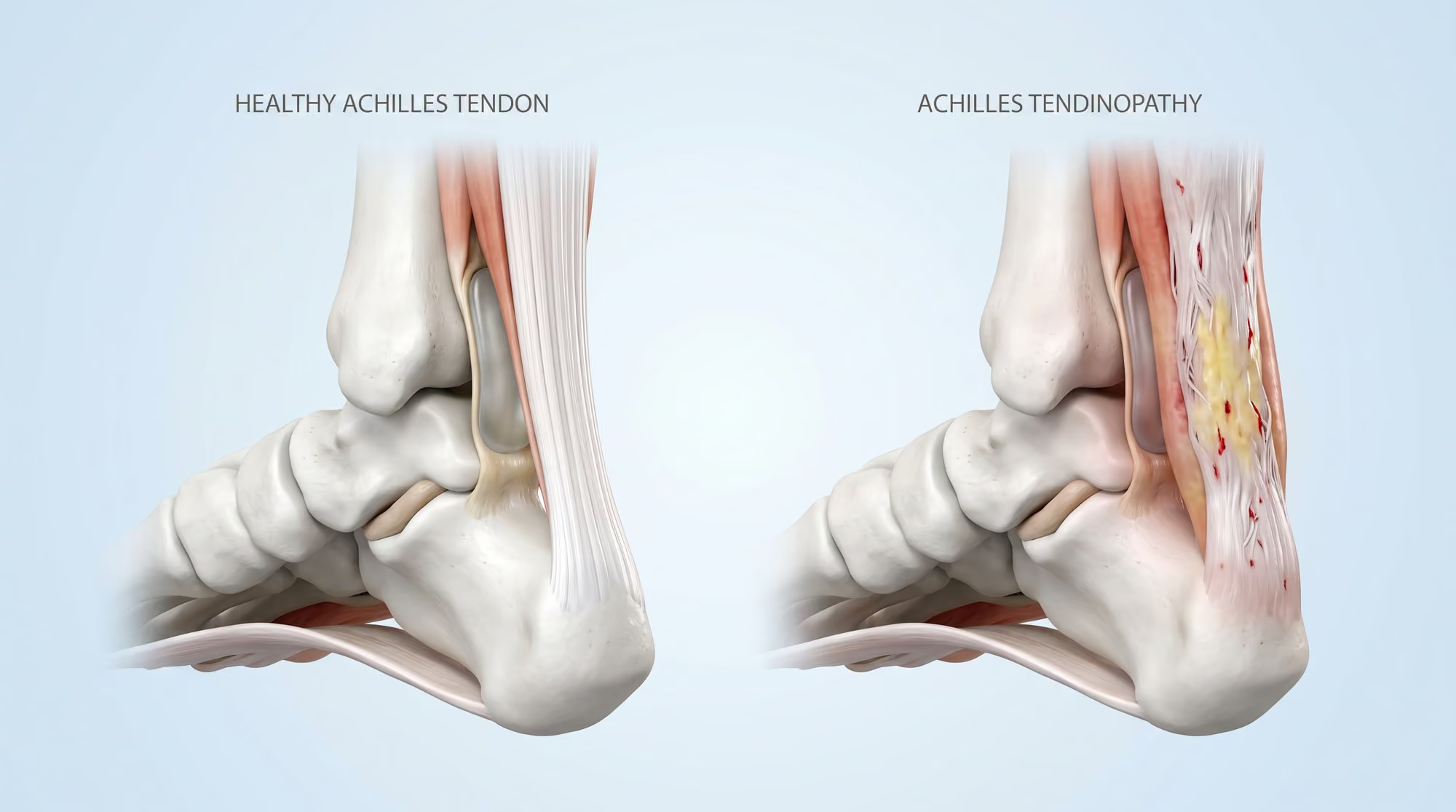
Achilles tendinitis is a condition that causes pain and dysfunction of the Achilles tendon, the large tendon that connects the calf muscles to the heel bone. It commonly develops from repetitive stress on the tendon and may occur with running, sports, increased activity, tight calf muscles, or abnormal foot mechanics.
Although the term Achilles tendinitis is commonly used, many chronic cases are more accurately described as Achilles tendinopathy or tendinosis. Rather than being caused primarily by inflammation, the tendon develops degenerative changes and microscopic damage over time, which can cause the tendon to become thickened, painful, and weaker.
Achilles tendinitis can occur within the tendon above the heel, known as non-insertional Achilles tendinitis, or where the tendon attaches to the heel bone, known as insertional Achilles tendinitis. Identifying the location and extent of the tendon damage is important because treatment may differ between these conditions.
What are the symptoms of Achilles tendinitis?
Symptoms of Achilles tendinitis can vary depending on the location and severity of the tendon injury.
- Achilles tendon pain: Pain can occur anywhere along the Achilles tendon but is commonly felt where the tendon attaches to the heel bone or several centimeters above the insertion.
- Pain after rest: Pain and stiffness are often worse with the first steps in the morning or when walking after a period of rest, known as post-static dyskinesia.
- Pain with activity: Symptoms may worsen with walking, running, exercise, climbing stairs, or walking up and down hills or inclines.
- Swelling: Swelling may develop along the Achilles tendon or around its attachment to the heel.
- Tendon thickening: Chronic Achilles tendinopathy may cause the tendon to become visibly or noticeably thickened.
- Tenderness: The tendon may be painful or tender when touched or compressed.
- Prominent bone at the heel: Patients with insertional Achilles tendinitis may develop a prominent area of bone or bone spurring where the Achilles tendon attaches to the heel bone.
How is Achilles tendinitis diagnosed?
Achilles tendinitis is diagnosed through a comprehensive foot and ankle examination. Our doctors evaluate the location of pain and tenderness, swelling, tendon thickness, ankle motion, calf flexibility, foot structure, and the function and strength of the Achilles tendon.
Weight-bearing X-rays may be obtained to evaluate the heel bone and identify bone spurs, calcification within the Achilles tendon, or other abnormalities that may contribute to symptoms. Ultrasound or MRI may be recommended when more detailed evaluation of the tendon is needed, particularly when significant tendon degeneration, a partial tear, or another injury is suspected.
Determining whether the condition involves the insertion of the Achilles tendon or the tendon above the heel, as well as the extent of tendon damage, is important for selecting the most appropriate treatment.
How is Achilles tendinitis treated?
Treatment for Achilles tendinitis depends on the location and severity of the tendon injury, the amount of tendon degeneration, and the factors contributing to the condition. Conservative treatment is generally recommended first, with the goals of reducing pain, promoting tendon healing, improving flexibility and strength, and reducing stress on the Achilles tendon.
Conservative treatment options
- Activity modification: Running, jumping, hills, and other activities that place repetitive stress on the Achilles tendon may need to be temporarily reduced or modified while the tendon heals.
- Supportive footwear: Properly fitted, supportive shoes can help reduce stress on the Achilles tendon. Barefoot walking and poorly supportive shoes may aggravate symptoms in some patients.
- Custom foot orthotics: Prescription custom orthotics can improve foot mechanics and reduce excessive stress on the Achilles tendon.
- Heel lifts: A temporary heel lift may be used in some patients to decrease tension on the Achilles tendon and improve comfort.
- Stretching: An appropriate stretching program can help improve calf flexibility and reduce tension on the Achilles tendon.
- Night splint: A night splint may be recommended to help maintain a gentle stretch of the calf and Achilles tendon while sleeping.
- Physical therapy: Physical therapy may include stretching, progressive strengthening, balance training, and other exercises designed to improve tendon function and help patients safely return to activity.
- Immobilization: A walking boot or other form of temporary immobilization may be recommended for more painful cases to reduce stress on the tendon and allow it to recover.
- Ice and medication: Ice and nonsteroidal anti-inflammatory medications (NSAIDs) may be recommended when appropriate to help manage pain and inflammation.
- Therapeutic laser: Therapeutic laser may be used as an adjunct to other treatments to help reduce pain and promote healing of the injured tendon.
When is surgery considered for Achilles tendinitis?
Surgery may be considered when Achilles tendon pain and functional limitations persist despite appropriate conservative treatment or when there is significant tendon degeneration or structural damage. The procedure recommended depends on the location and extent of tendon damage, the presence of bone spurs or calcification, and the individual patient's activity level and needs.
Surgical treatment options
- Tendon debridement and repair: Damaged or degenerative portions of the Achilles tendon are removed and the remaining healthy tendon is repaired.
- Tendon debridement and reattachment: For insertional Achilles tendinitis, damaged tendon and prominent or abnormal bone may be removed, and the Achilles tendon may be reattached to the heel bone using bone anchors.
- Tendon reconstruction or grafting: When significant tendon damage is present, additional tendon tissue may be used to reinforce or reconstruct the Achilles tendon.
- Tendon lengthening: In selected patients with significant tightness of the calf and Achilles tendon, a lengthening procedure to the gastrocnemius aponeurosis of the tendon itself may be performed to reduce tension on the tendon.
At-home exercise: Calf Stretch
Tight calf muscles put a constant strain on the Achilles tendon. Dr. Stewart reviews a calf stretch you can do at home to ease heel pain and support your recovery.
Exercises are general guidance. Follow the plan you were given at your visit and stop if you feel sharp pain.