


Bunions
At Timonium Foot and Ankle Center, our doctors have extensive experience diagnosing and treating bunions, from mild deformities to more advanced and painful conditions.Not every bunion requires surgery. Treatment starts with evaluating the severity of the deformity, your foot structure and mechanics, your symptoms, and how the bunion is affecting your activities.
When possible, we begin with conservative treatment and consider surgery when it offers the best opportunity to relieve pain and improve function.
If a bunion is causing pain, making shoes difficult to wear, or limiting your activities, call our office or request an appointment online. We’ll determine the best treatment options based on your individual needs.
What is a bunion?
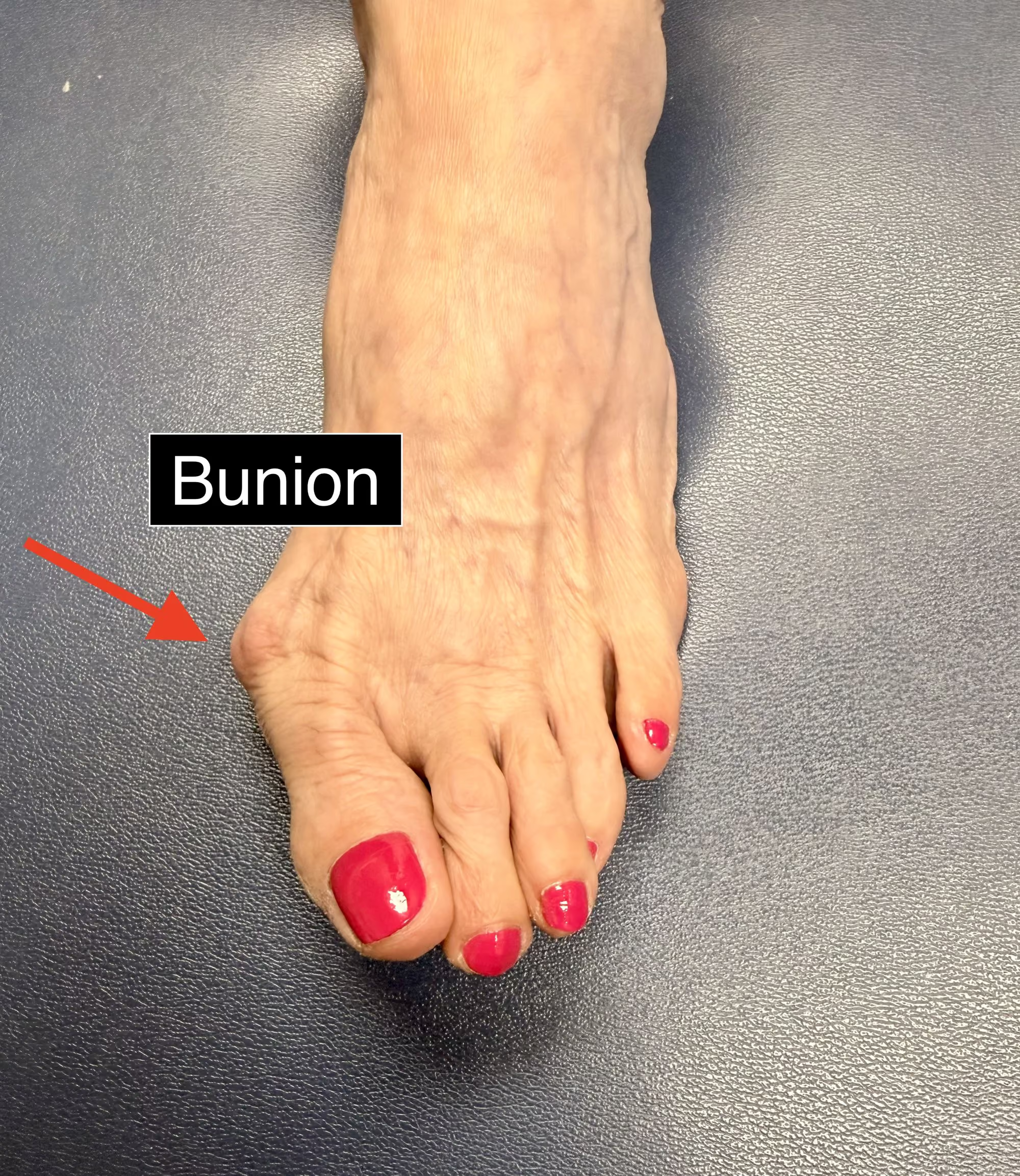
A bunion, also known as hallux valgus, is a deformity that develops at the joint at the base of the big toe. As the first metatarsal and big toe gradually move out of alignment, a prominent bump develops along the inside of the foot. The deformity can progress over time and may lead to pain, swelling, difficulty wearing shoes, and changes in the function of the foot.
A tailor’s bunion, also called a bunionette, is a similar deformity that develops on the outside of the foot at the base of the fifth toe. It can also become painful or irritated, particularly from pressure inside shoes.
What are the symptoms of a bunion?
Bunions do not always cause symptoms, but they may become painful as the deformity progresses or from pressure inside shoes. Symptoms can vary depending on the severity of the bunion and the amount of irritation around the joint.
Common symptoms include:
- Pain or tenderness over the prominent bump along the inside of the foot
- Redness, swelling, or irritation around the bunion
- Sharp, aching, or throbbing pain that may become more noticeable with walking, exercise, or certain shoes
- Pain within the big toe joint in more advanced cases
- Numbness, burning, or tingling from irritation or compression of nearby nerves
- Difficulty finding or wearing shoes comfortably
- Limited motion or stiffness of the big toe joint
- Difficulty walking, exercising, or participating in other physical activities
How is a bunion diagnosed?
Bunions are diagnosed through a comprehensive foot and ankle examination. Our doctors evaluate the location of your pain, the alignment and movement of the big toe joint, the severity of the deformity, and how the bunion affects the way you stand and walk.
Weight-bearing X-rays are typically used to evaluate the alignment of the bones and joints, measure the severity of the bunion deformity, and look for arthritis or other changes that may affect treatment. These findings help determine the most appropriate treatment options for your individual condition.
Tailor’s bunions are evaluated in a similar manner, with examination and weight-bearing X-rays used to assess the deformity along the outside of the foot.
How is a bunion treated?
Treatment for a bunion depends on the severity of the deformity, the amount of pain and limitation it causes, your foot structure, activity level, and the types of shoes you wear. Conservative treatment can often reduce pain and pressure from a bunion, although it does not correct the underlying bone deformity.
Surgery may be considered when a bunion continues to cause significant pain, difficulty wearing shoes, or limitations with walking and activity despite appropriate conservative treatment. Our doctors recommend bunion surgery to relieve pain and improve function, not for cosmetic reasons.
Conservative treatment options
Treatment for bunions and tailor’s bunions may include:
- Supportive footwear: Wider or deeper shoes with adequate room in the toe box can reduce pressure and irritation over the prominent bone while providing appropriate support for the foot. Open shoes may also be helpful when appropriate.
- Custom orthotics: Prescription custom orthotics can improve foot mechanics, redistribute pressure, and help reduce stress around the bunion and other painful areas of the foot.
- Padding: Protective padding over the bunion can reduce pressure and irritation from shoes.
- Activity modification: Temporarily modifying activities that increase pain may help reduce irritation around the bunion.
- Ice and medication: Ice and medications such as nonsteroidal anti-inflammatory drugs (NSAIDs), acetaminophen, or oral corticosteroids may be recommended when appropriate to help manage pain and inflammation.
- Shoe modifications: Certain leather shoes can be stretched by a cobbler to provide room to accomadate bony deformities.
When is bunion surgery considered ?
When a bunion remains painful or continues to limit activity despite appropriate conservative treatment, surgery may be considered. There are many different bunion procedures, and the appropriate surgery depends on the severity and type of deformity, joint alignment, presence of arthritis, and individual patient needs.
The goal of bunion surgery is to correct the underlying deformity, improve alignment, relieve pain, and restore function while reducing the likelihood of recurrence. Recovery depends on the specific procedure performed.
Surgical treatment options
- Bunionectomy: Removal of the prominent portion of bone when appropriate.
- Minimally invasive bunion surgery (MIS): For appropriate bunion deformities, minimally invasive techniques use smaller incisions and specialized instruments to realign the bones and correct the deformity.
- Osteotomy: Surgical cutting and repositioning of bone to correct the deformity, typically stabilized with screws, plates, or other fixation.
- First metatarsophalangeal joint fusion: Fusion of the big toe joint may be recommended for severe bunions, significant arthritis, or certain recurrent deformities.
- Lapidus procedure: Fusion of the first metatarsal-medial cuneiform joint to correct certain bunion deformities and improve stability of the first ray.
- Joint arthroplasty: Resection or reconstruction of the joint may be considered in selected patients.
Tailor’s bunion surgery may similarly involve removal of the prominent bone, an osteotomy to reposition the fifth metatarsal, or other procedures depending on the severity and structure of the deformity.
At-home exercises: Big Toe Joint (1st MPJ)
These exercises keep the big toe joint mobile and strengthen the small muscles around it, which can ease bunion discomfort. Dr. Stewart walks you through each one.
Exercises are general guidance. Follow the plan you were given at your visit and stop if you feel sharp pain.