


Hallux Limitus (Arthritis)
At Timonium Foot and Ankle Center, our doctors have extensive experience evaluating and treating hallux limitus and arthritis of the big toe joint. Because joint pain and stiffness can develop for different reasons, treatment starts with determining the severity of the arthritis, how the joint is functioning, and the underlying cause of your symptoms.
Many cases of hallux limitus and big toe arthritis can be managed without surgery. Treatment may include supportive footwear, custom orthotics, activity modification, medications, injections, or other conservative treatments based on your individual needs.
If big toe pain or stiffness is limiting your activities, call our office or request an appointment online. We’ll determine what’s causing the problem and develop a treatment plan based on your diagnosis, activity level, and goals.
What is hallux limitus?
Hallux limitus is a condition characterized by decreased motion of the big toe joint, also known as the first metatarsophalangeal joint. It most commonly develops as osteoarthritis causes progressive damage to the cartilage within the joint. As the cartilage deteriorates, the joint space can narrow and bone spurs may develop, resulting in increasing pain, stiffness, and loss of motion.
Hallux limitus is a progressive condition and can range from mild arthritis with relatively preserved joint motion to advanced arthritis with significant cartilage loss and restricted movement. When the condition progresses to end-stage arthritis with severe loss of motion, it is referred to as hallux rigidus.
What are the symptoms of hallux limitus?
Symptoms of hallux limitus can vary depending on the severity of arthritis and the amount of motion remaining in the big toe joint.
- Big toe joint pain and swelling: Pain and inflammation may develop around the first metatarsophalangeal (MTP) joint, particularly with walking, exercise, or activities that require the big toe to bend.
- Limited motion and joint stiffness: The big toe may become increasingly difficult or painful to bend, especially when pushing off during walking.
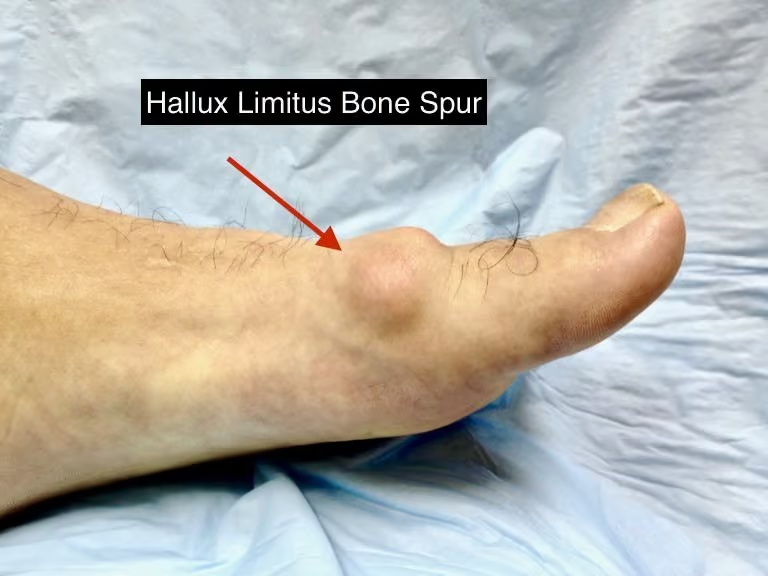
- Bone spurs: A prominent bone spur may develop on top of the big toe joint and become more noticeable as the condition progresses.
- Grinding within the joint: Cartilage damage and joint irregularity can cause grinding or crepitus when the big toe moves.
- Pain in adjacent joints: As motion in the big toe joint decreases, pressure may be transferred to other areas of the foot. Pain commonly develops beneath the second metatarsophalangeal joint or at the hallux interphalangeal joint.
- Difficulty walking: Pain and loss of big toe motion can alter the way you walk and make walking, exercise, and other activities uncomfortable.
- Callus formation: Increased pressure from compensation may result in calluses beneath the second metatarsophalangeal joint or the hallux interphalangeal joint.
- Pain with shoes: A bone spur on top of the big toe joint may rub against shoes, causing pressure, irritation, and pain.
How is hallux limitus diagnosed?
Hallux limitus is diagnosed through a comprehensive foot and ankle examination and weight-bearing X-rays. Our doctors evaluate the location of pain, range of motion of the big toe joint, areas of tenderness, bone prominence, and how the foot functions during walking.
X-rays help determine the severity of arthritis and may show joint-space narrowing, bone spurs, changes in the shape of the joint, and other signs of cartilage deterioration. An accurate diagnosis and assessment of the severity of the arthritis are important for determining the most appropriate treatment.
How is hallux limitus treated?
Conservative treatment is generally the first approach for hallux limitus and osteoarthritis of the big toe joint. Because arthritis is a progressive condition, treatment cannot reverse the cartilage damage that has already occurred. The goal of treatment is to reduce pain, decrease stress on the joint, improve function, and help patients remain active.
Conservative treatment
- Anti-inflammatory medications (NSAIDs): These medications may help reduce pain and inflammation, particularly during the earlier stages of arthritis.
- Tylenol (acetaminophen): Acetaminophen may be used to help manage pain when appropriate.
- Shoe modifications: Wider or deeper shoes can reduce pressure and irritation over bone spurs and other prominent areas around the big toe joint.
- Steroid injections: Corticosteroid injections into the affected joint may help reduce inflammation and provide temporary pain relief.
- Custom foot orthotics: Custom orthotics or appropriate bracing can help improve foot mechanics and reduce painful motion and pressure through the arthritic joint.
- Supportive footwear and avoiding barefoot walking: Properly fitted, supportive shoes can help reduce pressure and improve comfort. Barefoot walking and poorly supportive shoes may aggravate symptoms in some patients.
- Ice and elevation: Ice may help reduce pain and inflammation, while elevation can be helpful when swelling is present.
- Activity modification: Activities that repeatedly place stress on the big toe joint may need to be reduced or modified. Lower-impact activities such as swimming, bicycling, and certain forms of strength or circuit training may be better tolerated.
- Physical therapy: Physical therapy may help address strength, mobility, gait, and compensatory problems that develop as a result of limited motion in the big toe joint.
When is surgery considered for hallux limitus?
Surgery may be considered when pain and functional limitations persist despite appropriate conservative treatment. The procedure recommended depends on the severity of the arthritis, the amount of cartilage remaining, the degree of joint motion, the presence of bone spurs, the patient’s activity level, and other individual factors.
Surgical treatment
- Cheilectomy: Removal of bone spurs and a portion of excess bone around the joint to reduce impingement and improve motion.
- Joint decompression osteotomy: The metatarsal bone is surgically cut and repositioned to decompress the joint and improve its function. The bone is typically stabilized with screws while it heals.
- Arthroplasty: A joint-sparing procedure in which damaged portions of the joint are removed or remodeled to reduce pain and improve function.
- Joint implant: In selected patients, an implant may be used to replace or resurface part of the damaged joint.
- Joint fusion (arthrodesis): The damaged joint surfaces are removed and the bones are permanently fused together. This eliminates painful motion and is commonly considered for advanced or end-stage arthritis.
- Subchondral bone drilling: In selected cases, small channels may be created in the bone beneath an area of damaged cartilage to stimulate a healing response.
Because hallux limitus and osteoarthritis are progressive conditions, patients who undergo a joint-preserving procedure may continue to develop arthritis and could require additional treatment or surgery in the future.
At-home exercises: Big Toe Joint (1st MPJ)
Keeping the big toe joint moving is key with hallux limitus. Dr. Stewart walks you through exercises that maintain motion and strength in the 1st MPJ.
Exercises are general guidance. Follow the plan you were given at your visit and stop if you feel sharp pain.