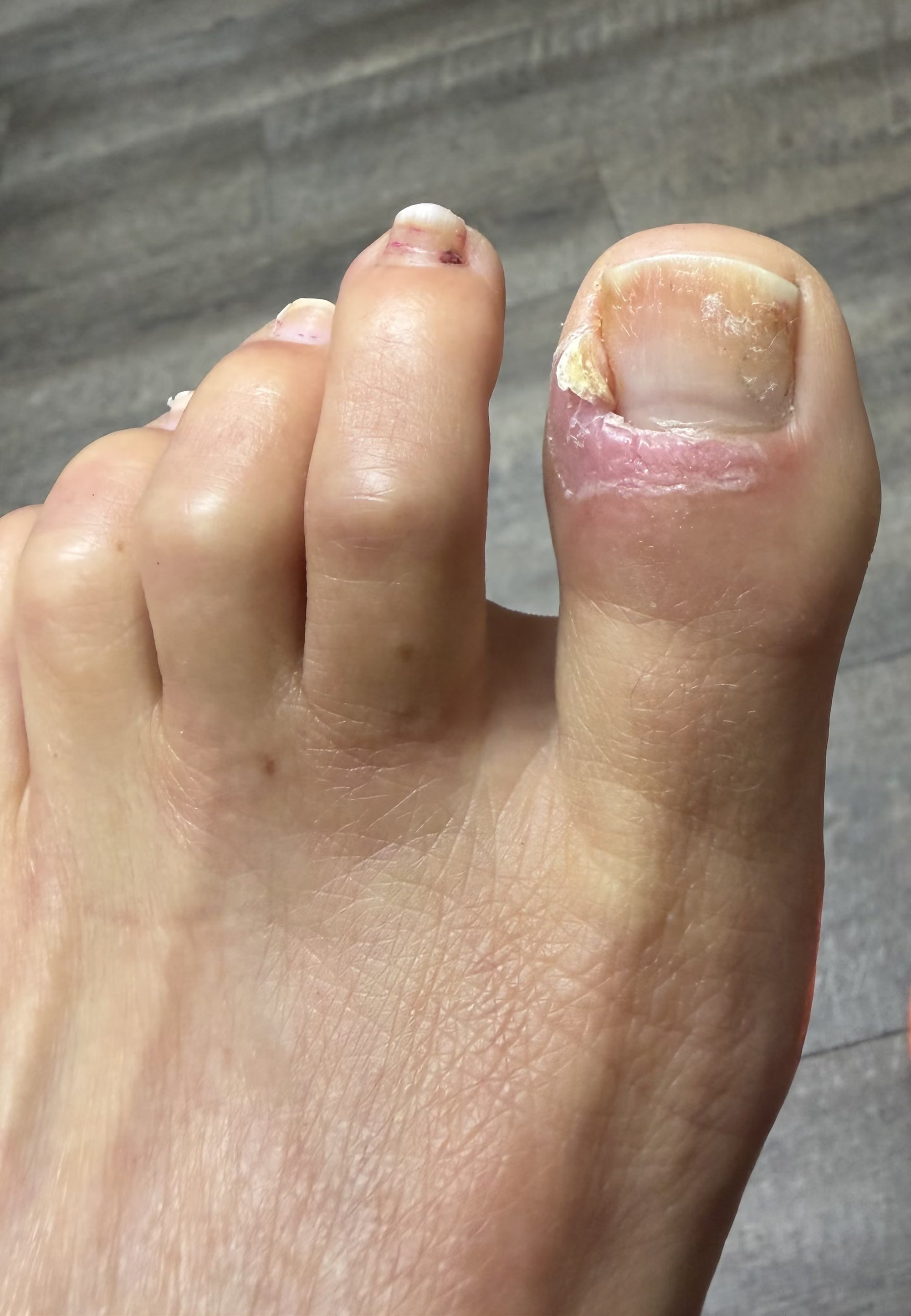


Ingrown Toenails
At Timonium Foot and Ankle Center, our doctors have extensive experience treating painful and recurrent ingrown toenails in children and adults. An ingrown toenail does not have to be infected to cause significant pain, and determining whether infection is present is an important part of the evaluation.
Treatment depends on the severity of the ingrown toenail and whether the problem is new or recurrent. Mild cases may respond to conservative care, while more painful or recurrent ingrown toenails can often be treated with a simple in-office procedure.
If you have a painful, red, swollen, or draining toenail, call our office or request an appointment online. We’ll evaluate the nail, determine whether infection is present, and recommend the most appropriate treatment.
What is an ingrown toenail?
An ingrown toenail occurs when the edge or corner of the toenail presses into or grows into the surrounding skin. This most commonly affects the big toe and can cause significant pain, inflammation, swelling, and sometimes infection.
An ingrown toenail does not have to be infected to be painful. In many patients, the nail itself causes inflammation and irritation of the surrounding skin without a bacterial infection. As the condition progresses, the skin may become increasingly swollen and develop granulation tissue, drainage, or bleeding.
Some patients experience a single episode, while others develop recurrent ingrown toenails because of the natural shape of the nail or other underlying factors.
What are the symptoms of an ingrown toenail?
- Pain: Sharp, throbbing, or tender pain is commonly felt along the corner or side of the affected toenail.
- Redness and swelling: The skin surrounding the ingrown nail may become red, swollen, or inflamed.
- Warmth: The affected area may feel warmer than the surrounding skin, particularly when significant inflammation or infection is present.
- Skin overgrowth and granulation tissue: Chronic irritation can cause inflamed tissue to grow along the edge of the nail.
- Drainage: Clear fluid or pus may drain from the affected nail border.
- Bleeding: Inflamed or overgrown tissue along the nail border may bleed easily.
How is an ingrown toenail diagnosed?
An ingrown toenail is usually diagnosed through a comprehensive examination of the toe and nail. Our doctors evaluate the shape and position of the toenail, the surrounding skin, the location of pain and inflammation, and whether drainage, granulation tissue, or other signs of infection are present.
What causes ingrown toenails?
Ingrown toenails can develop for several reasons, and some patients have more than one contributing factor.
- Natural nail shape: Some toenails are naturally curved or incurvated, making the nail borders more likely to press into the surrounding skin.
- Foot structure and mechanics: Structural or biomechanical conditions, including hallux limitus or hallux rigidus, may alter pressure around the great toe and contribute to recurrent nail problems.
- Trauma: An injury to the toe or repetitive pressure against the nail can cause the nail to become ingrown.
- Improperly fitting shoes: Shoes that place excessive pressure on the toes can aggravate an ingrown nail.
- Toenail fungus: Fungal infection can cause the nail to become thickened, distorted, or curved and may contribute to an ingrown nail.
- Improper nail trimming: Cutting the nail too short or rounding deeply into the corners can contribute to ingrown toenails in some patients.
How are ingrown toenails treated?
Treatment has two primary goals: relieve the pain and inflammation or infection when present, and reduce the likelihood that the ingrown toenail will return.
Treatment depends on the severity of the condition, whether infection is present, whether the problem is recurrent, and the patient's individual medical needs. Both temporary and permanent treatment options are available.
Temporary treatment options
- Nail border removal: The portion of the toenail pressing into the skin can be removed to relieve pressure and pain.
- Nail trimming: In selected mild cases, carefully trimming the offending portion of the nail may provide relief.
- Footwear modification: Wider or deeper shoes can reduce pressure against the affected toe while the area heals.
- Treatment of infection: When a bacterial infection is present, additional treatment may be necessary based on the severity and extent of the infection.
Temporary treatment can provide significant relief, but because the nail matrix remains intact, the same portion of the toenail can grow back and become ingrown again.
Permanent treatment options
For patients with recurrent ingrown toenails, a permanent procedure may be recommended to prevent the problematic portion of the nail from growing back.
- Partial nail avulsion with matrixectomy: The ingrown portion of the toenail is removed, and the corresponding nail matrix is treated to prevent that portion of the nail from regrowing.
- Chemical matrixectomy: A chemical such as phenol may be applied to destroy the nail-producing cells responsible for the ingrown portion of the nail.
- Surgical matrixectomy: In selected or recurrent cases, the nail matrix cells may be surgically removed.
- Permanent total nail removal: In certain circumstances, the entire nail and its associated matrix may be permanently removed.
What happens during a permanent ingrown toenail procedure?
One of the most common procedures for a recurrent ingrown toenail is a partial nail avulsion with phenol matrixectomy. The toe is numbed with local anesthesia, the offending nail border is removed, and phenol is applied to the corresponding nail matrix to prevent that portion of the toenail from growing back.
Only the problematic portion of the nail is typically treated, allowing the remainder of the toenail to remain in place.
Following the procedure, patients perform local wound care while the area heals. Many patients can return to normal daily activities relatively quickly, although strenuous physical activity may need to be temporarily limited. Drainage during the healing process is common, and complete healing may take several weeks.
Permanent procedures are highly effective at reducing recurrence, although no procedure can guarantee that an ingrown toenail will never return. If the nail border does regrow and becomes symptomatic again, the procedure can usually be repeated or a surgical matrixectomy may be considered.
T