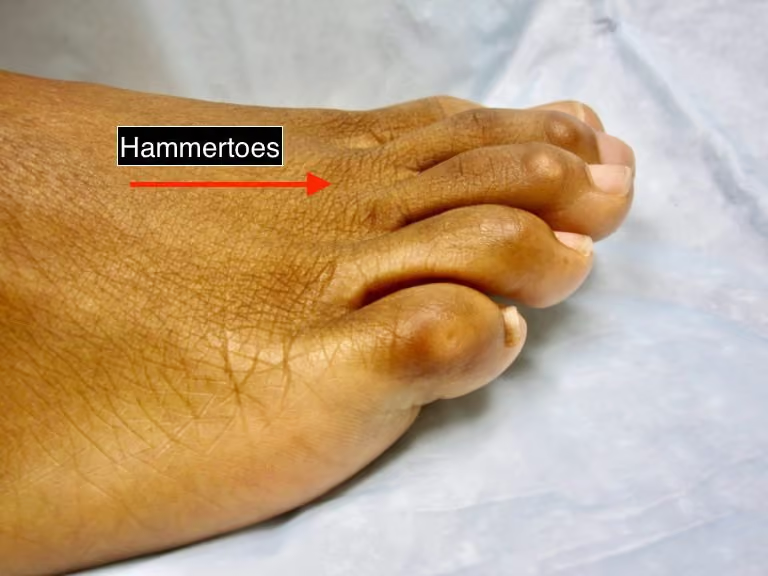


Hammertoes
At Timonium Foot and Ankle Center, our doctors diagnose and treat hammertoes and other toe deformities, including mallet toes and claw toes. Treatment depends on the type and severity of the deformity, whether the toe remains flexible, and the problems it is causing.
Many hammertoes can initially be managed without surgery. When a deformity becomes painful, rigid, or continues to interfere with shoes and activity despite conservative treatment, surgical correction may be considered.
If a hammertoe is causing pain, rubbing in your shoes, recurrent corns, or difficulty walking comfortably, call our office or request an appointment online. We’ll determine the cause and recommend treatment based on your individual condition.
What is a hammertoe?
A hammertoe is a deformity in which one or more of the smaller toes become bent at the middle joint instead of remaining straight. This creates a prominent area on top of the toe that can rub against shoes and may also increase pressure at the tip of the toe.
Hammertoes may initially remain flexible but can become more rigid over time. They may develop because of an imbalance between the muscles and tendons controlling the toe and can be associated with foot structure, biomechanics, certain types of shoes, arthritis, or other foot conditions.
A mallet toe primarily affects the joint closest to the tip of the toe, while a claw toe involves multiple joints and may cause the toe to curl downward. Although these deformities differ anatomically, they can produce similar problems with pressure, pain, corns, and shoe irritation.
What are the symptoms of hammertoes?
Hammertoes do not always cause symptoms, but they can become increasingly painful as the deformity progresses as result of pressure and rubbing inside shoes.
- Pain or tenderness over the prominent joint on top of the toe
- Pain or pressure at the tip of the toe
- Corn formation over the prominent joint
- Callus formation at the tip of the toe or other areas of increased pressure
- Redness or swelling
- Numbness, burning, or tingling in the affected toe
- Difficulty wearing shoes comfortably
- Increasing stiffness or rigidity of the toe
- Difficulty walking, exercising, or participating in other physical activities
Symptoms may worsen as a flexible hammertoe becomes more rigid over time.
How are hammertoes diagnosed?
Hammertoes are diagnosed through a comprehensive foot and ankle examination. Our doctors evaluate the alignment of the toes, areas of pain or pressure, joint motion, and whether the deformity is flexible or rigid. The foot is also evaluated for other conditions that may be contributing to the deformity.
Weight-bearing X-rays may be taken to assess the alignment of the bones and joints, determine the severity of the deformity, and look for arthritis or other changes that may affect treatment.
How are hammertoes treated?
Treatment for hammertoes depends on the severity of the deformity, whether the toe is flexible or rigid, the amount of pain or pressure it causes, and how it affects shoes, walking, and activity. Conservative treatment can often reduce pain and pressure, although it does not permanently correct a structural hammertoe deformity.
Surgery may be considered when a hammertoe continues to cause significant pain, recurrent corns or calluses, difficulty wearing shoes, or limitations with walking and activity despite appropriate conservative treatment. Our doctors recommend hammertoe surgery to relieve pain and improve function, not for cosmetic reasons.
Conservative treatment options
- Supportive footwear: Wider and deeper shoes with adequate room in the toe box can reduce pressure over the prominent joints and tips of the toes. Open shoes may also be helpful when appropriate.
- Padding: Protective padding over prominent joints, corns, or other areas of pressure can reduce rubbing and irritation from shoes.
- Custom orthotics: Prescription custom orthotics can improve foot mechanics, redistribute pressure, and address contributing biomechanical problems.
- Activity modification: Temporarily modifying activities that increase pain or pressure may help reduce irritation.
- Ice and medication: Ice and medications such as nonsteroidal anti-inflammatory drugs (NSAIDs), acetaminophen, or oral corticosteroids may be recommended when appropriate to help manage pain and inflammation.
- Corticosteroid injections: In selected cases, an injection may be considered when inflammation around a painful joint or surrounding tissue is contributing to symptoms.
- Supportive footwear and avoiding barefoot walking: Properly fitted, supportive shoes can help reduce pressure and improve comfort. Barefoot walking and poorly supportive shoes may aggravate symptoms in some patients.
When is surgery considered for hammertoes?
When a hammertoe remains painful, becomes rigid, causes recurrent corns or pressure areas, or continues to interfere with shoes and activity despite appropriate conservative treatment, surgery may be considered.
The procedure is selected based on whether the deformity is flexible or rigid, which joints and tendons are involved, and whether other foot deformities are contributing to the problem. The goal is to improve toe alignment, reduce painful pressure points, and restore function. Recovery depends on the procedure performed.
Surgical treatment options
- Arthroplasty: Removal of a small portion of the prominent joint or bone to straighten the toe and reduce pressure.
- Interphalangeal joint fusion (arthrodesis): Straightening and fusion of the affected toe joint, typically used for more rigid deformities.
- Tendon release or lengthening: Release or lengthening of affected tendons to help correct a flexible or partially flexible deformity.
- Tendon transfer: Repositioning a tendon to help improve alignment and balance of the toe in selected cases.
- Minimally invasive hammertoe surgery: Selected deformities may be corrected through small incisions using minimally invasive techniques.
- Syndactyly: Surgical joining of adjacent toes may be considered in selected or recurrent deform