


Peroneal Tendinitis
At Timonium Foot and Ankle Center, our doctors have extensive experience evaluating and treating peroneal tendon injuries. Because pain along the outside of the ankle can result from tendon inflammation or degeneration, tendon tears, ankle instability, fractures, and other conditions, treatment starts with an accurate diagnosis and determining the extent of the injury.
Many cases of peroneal tendinitis can be treated without surgery. Treatment may include activity modification, supportive footwear, bracing or immobilization, custom orthotics, physical therapy, therapeutic laser, and other conservative treatments based on your individual needs.
If pain along the outside of your ankle or foot is limiting your activities or isn't improving, call our office or request an appointment online. We'll determine what's causing the problem and develop a treatment plan based on your diagnosis, activity level, and goals.
What is peroneal tendinitis?
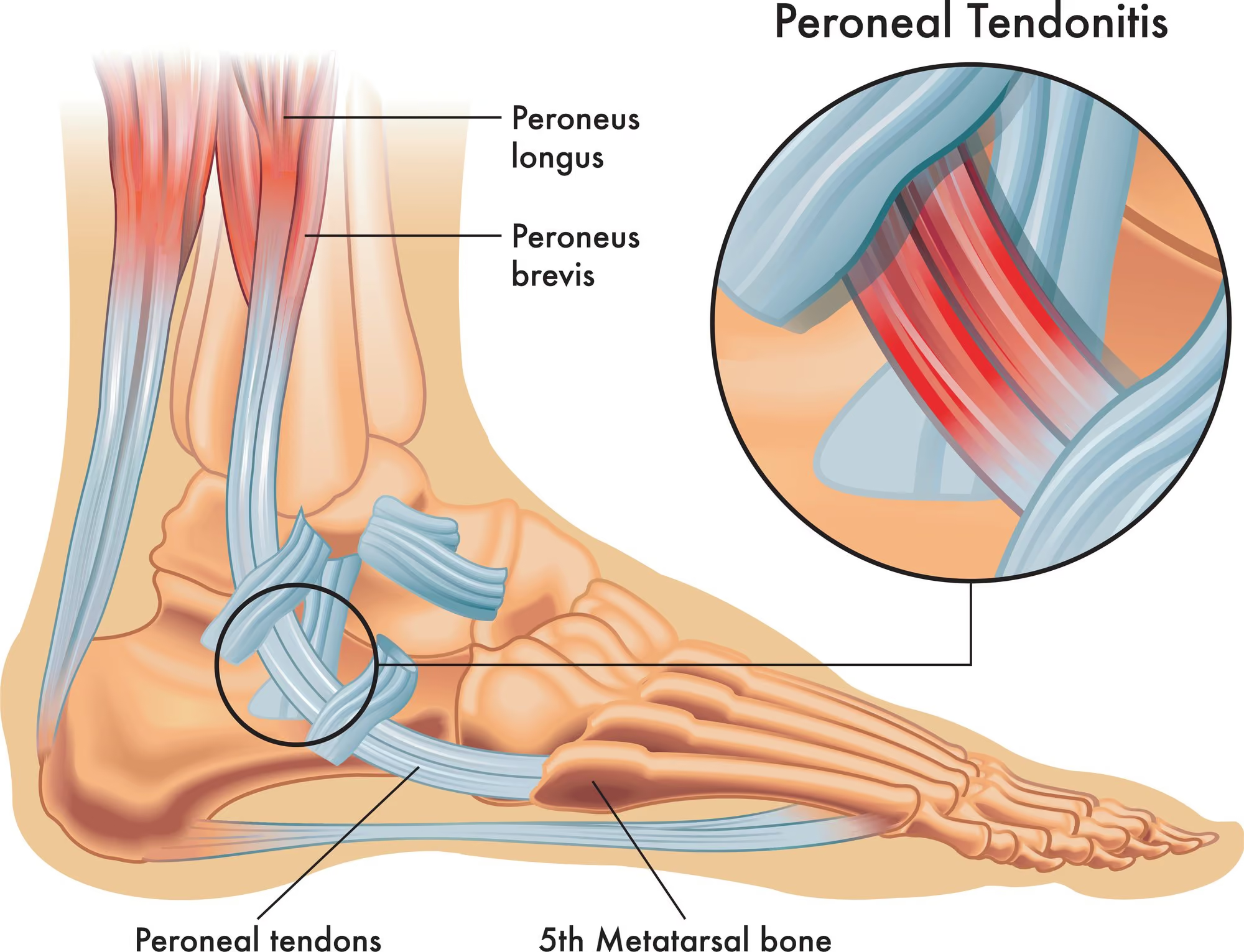
Peroneal tendinitis is a condition involving irritation, inflammation, or degeneration of one or both of the peroneal tendons, which run along the outside of the ankle and foot. These tendons help stabilize the ankle, support the foot, and control movement during walking and physical activity.
Peroneal tendon problems commonly develop from repetitive stress, overuse, ankle instability, abnormal foot mechanics, or a previous ankle injury. Over time, the tendons may become thickened or develop areas of degeneration or tearing. In some patients, the structures that hold the tendons behind the fibula can also become injured, allowing the tendons to move out of their normal position, known as peroneal tendon subluxation.
Peroneal tendon injuries can range from mild tendinitis or tendinopathy to partial or complete tendon tears. Identifying which tendon is involved and the extent of the injury is important because treatment can vary depending on the underlying problem.
What are the symptoms of peroneal tendinitis?
Symptoms of peroneal tendinitis can vary depending on which tendon is involved and the severity of the injury.
- Pain along the peroneal tendons: Pain may occur anywhere along the course of the tendons, from the outside of the ankle into the outer portion of the foot.
- Swelling: Swelling may develop along the involved tendon or around the outside of the ankle.
- Tenderness: The involved tendon may be painful or tender when touched or with certain ankle movements.
- Changes in foot structure: Certain peroneal tendon problems may be associated with a higher-arched foot or changes in the position and mechanics of the foot.
- Popping or snapping at the ankle: If the tissues that normally hold the peroneal tendons in position are injured, the tendons may move or sublux over the outside of the ankle, causing a popping, snapping, or dislocating sensation.
How is peroneal tendinitis diagnosed?
Peroneal tendinitis is diagnosed through a comprehensive foot and ankle examination. Our doctors evaluate the location of pain and tenderness, swelling, tendon strength and function, ankle stability, foot structure, and whether the peroneal tendons remain in their normal position during movement.
Weight-bearing X-rays may be obtained to evaluate the foot and ankle and identify fractures, changes in foot structure, or other abnormalities that may contribute to symptoms. Ultrasound or MRI may be recommended when more detailed evaluation is needed to determine the extent of tendon degeneration, tearing, or subluxation.
Identifying which peroneal tendon is involved and determining whether there is tendon tearing, instability, or another associated injury are important for selecting the appropriate treatment.
How is peroneal tendinitis treated?
Treatment depends on the severity and extent of the tendon injury. Many cases of peroneal tendinitis improve within approximately 6–8 weeks, although more significant or chronic tendon injuries may require a longer recovery period. Returning to activity before the tendon has adequately recovered can delay healing and lead to recurrent symptoms or further tendon injury.
Early conservative treatment is generally recommended to protect the tendon, reduce pain and inflammation, restore strength and function, and prevent progression of the injury. Most patients can be successfully treated without surgery.
Conservative treatment options
- Immobilization, AFOs, and bracing: Depending on the severity of the injury, treatment may include a cast and crutches, walking boot, hinged ankle-foot orthosis (AFO), ankle brace, or other supportive device to protect the tendon while it heals.
- Activity modification: Walking for exercise, running, jogging, and other activities that repeatedly stress the peroneal tendons may need to be temporarily reduced or modified. Lower-impact activities such as swimming, bicycling, or appropriate strength training may be better tolerated during recovery.
- Stretching and strengthening: A targeted exercise program, including resistance exercises when appropriate, can help restore strength and function to the peroneal tendons and surrounding muscles.
- Physical therapy: Physical therapy may be recommended to improve strength, flexibility, balance, ankle stability, and function and to help patients safely return to activity.
- Therapeutic laser: Therapeutic laser may be used as an adjunct to other treatments to help reduce pain and promote healing of the injured tendon.
- Compression therapy: Compression, including prescription compression stockings when appropriate, may help control swelling around the foot and ankle.
- Ice and elevation: Ice applied to the area of maximum tenderness and elevation may help reduce pain and swelling.
- Medications: Anti-inflammatory medications (NSAIDs), acetaminophen (Tylenol), or other medications may be recommended when appropriate to help manage pain and inflammation.
- Supportive footwear: Properly fitted, supportive shoes can help stabilize the foot and reduce stress on the peroneal tendons. Barefoot walking and poorly supportive shoes may aggravate symptoms in some patients.
- Custom foot orthotics: Prescription custom orthotics may help improve foot mechanics, provide stability, and reduce excessive stress on the peroneal tendons.
- Weight management: When appropriate, weight loss may help reduce stress on the foot and ankle and improve symptoms.
- Joint injections: In selected patients, steroid injections into an adjacent painful or inflamed foot or ankle joint may be considered. Steroid is generally not injected directly into the peroneal tendon.
When is surgery considered for peroneal tendinitis?
Surgery may be considered when persistent pain, tendon dysfunction, tearing, or instability does not improve with appropriate conservative treatment. Surgery may also be necessary for more significant tendon tears or recurrent subluxation of the peroneal tendons. The procedure depends on the location and extent of the tendon injury, the stability of the tendons, foot structure, and the individual patient's activity level and needs.
Surgical treatment options
- Tendon debridement and repair: Damaged or degenerative portions of the tendon are removed and the remaining healthy tendon is repaired.
- Tendon transfer: When one of the peroneal tendons is severely damaged and cannot be adequately repaired, the remaining functional tendon may be used to restore function.
- Repair of the peroneal retinaculum: The tissues that hold the peroneal tendons behind the fibula may be repaired or reconstructed when tendon subluxation or instability is present.
- Fibular groove deepening: The groove behind the fibula in which the peroneal tendons travel may be surgically modified to improve tendon stability in selected patients.
- Fibular osteotomy: In selected cases, the fibula may be surgically repositioned and stabilized with screws or a plate when correction of the underlying anatomy is necessary.
At-home exercise: Ankle Range of Motion
Ankle range of motion exercises keep the peroneal tendons moving through their range of motion and help prevent stiffness and build strength. Follow along as Dr. Stewart's describes the exercises.
Exercises are general guidance. Follow the plan you were given at your visit and stop if you feel sharp pain.