


Posterior Tibial Tendon Dysfunction (PTTD)
At Timonium Foot and Ankle Center, our doctors have extensive experience diagnosing and treating posterior tibial tendon dysfunction, posterior tibial tendinitis, and associated flatfoot deformities.
Early diagnosis is important because the condition can progress over time. Many cases can be treated without surgery, particularly when identified early.
If you are experiencing pain or swelling along the inside of your foot or ankle, changes in your arch, or difficulty walking, call our office or request an appointment online. We’ll determine the cause and develop a treatment plan based on your individual needs.
What is posterior tibial tendon dysfuntion (PTTD)?
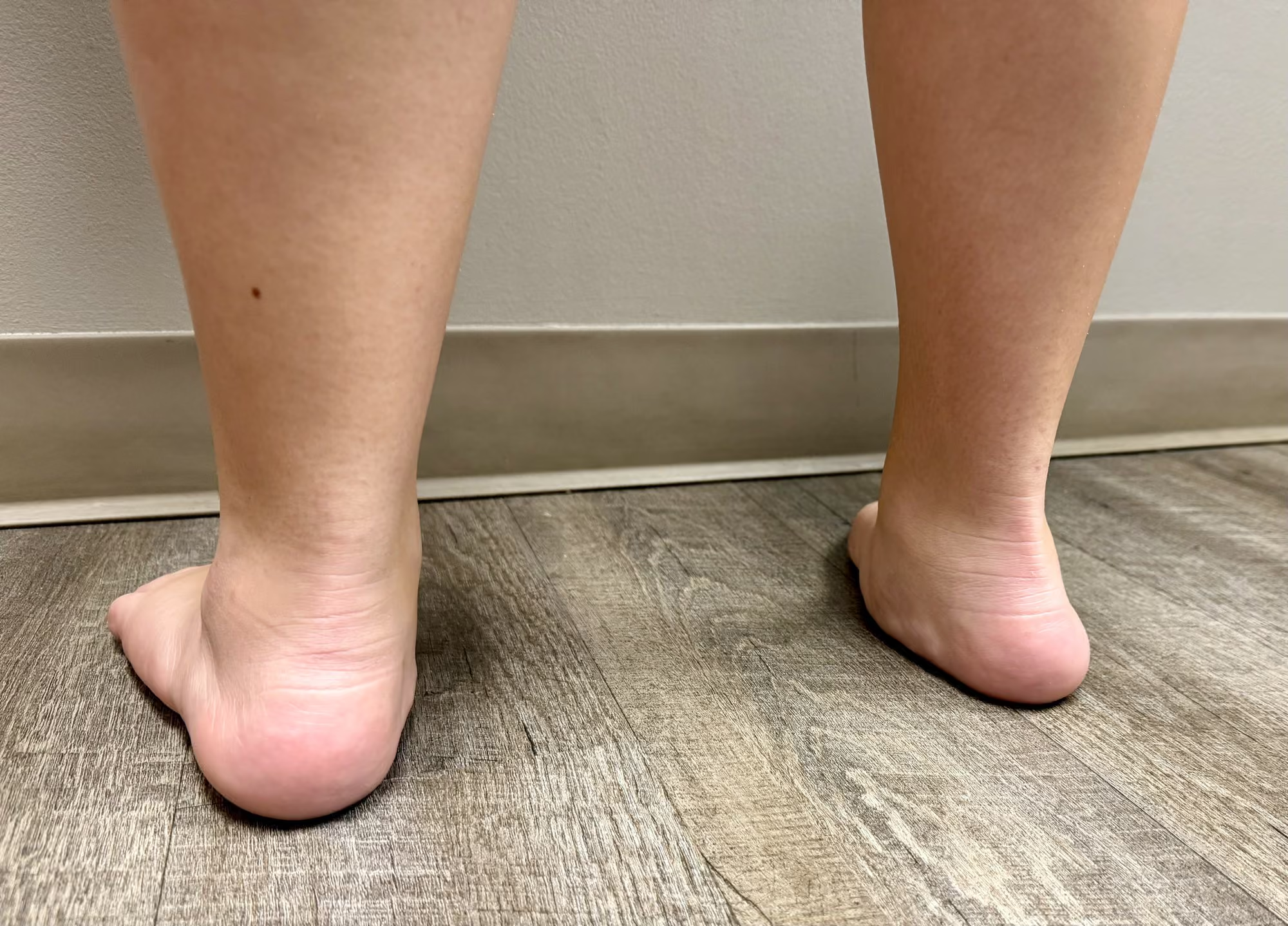
Posterior tibial tendon dysfunction (PTTD) develops when the posterior tibial tendon becomes inflamed, weakened, or damaged and can no longer properly support the arch of the foot. The condition may begin with pain and inflammation along the tendon and progress to flattening of the arch and changes in the alignment of the foot and ankle.
More advanced cases can lead to a progressive collapsing foot deformity (PCFD), previously referred to as adult-acquired flatfoot.
What are the symptoms of posterior tibial tendon dysfunction (PTTD)?
Symptoms of posterior tibial tendon dysfunction can vary depending on the severity and progression of the condition. Pain and tenderness are commonly felt along the inside of the foot and ankle, often just above or behind the inside ankle bone, and may extend along the tendon to its attachment near the arch of the foot.
- Pain, swelling, or tenderness along the posterior tibial tendon
- Progressive flattening or collapse of the arch
- Heel pain or pain along the inside of the foot
- Pain along the outside or top of the foot and ankle as the deformity progresses
- Difficulty standing or walking for prolonged periods
- Weakness or difficulty rising onto the toes of the affected foot
- Muscle or tendon spasm along the outside of the foot and ankle in more advanced cases
- Burning, tingling, or pain near the tarsal tunnel on the inside of the ankle when nearby nerves become irritated
Symptoms may worsen as the condition progresses, which is why early evaluation is important when pain or changes in the shape of the foot develop.
How is posterior tibial tendon dysfunction (PTTD) diagnosed?
Posterior tibial tendon dysfunction is diagnosed through a comprehensive foot and ankle examination. Our doctors evaluate the posterior tibial tendon, foot and ankle alignment, arch height, strength, range of motion, and the way you stand and walk. You may also be asked to rise onto your toes to evaluate the strength and function of the tendon.
Weight-bearing X-rays may be taken to assess the alignment of the foot and the severity of any flatfoot deformity. Ultrasound or MRI may be recommended in some cases to evaluate the extent of tendon damage or when additional information is needed.
How is posterior tibial tendon dysfunction (PTTD) treated?
Treatment for posterior tibial tendon dysfunction depends on the severity of the tendon injury, the flexibility and alignment of the foot, the degree of flatfoot deformity, and the patient's symptoms and activity level. Because PTTD can be progressive, early treatment is important to reduce stress on the tendon, relieve pain, and help prevent further collapse of the arch.
Many patients can be successfully treated without surgery, particularly when the condition is diagnosed and treated before significant deformity develops.
Conservative treatment options
- Immobilization, AFOs, and bracing: Depending on the severity of the condition, treatment may include a walking boot, cast, ankle brace, custom ankle-foot orthosis (AFO), or other supportive device to reduce stress on the posterior tibial tendon and support the foot and ankle.
- Activity modification: Temporarily reducing walking, running, jumping, and other activities that aggravate the tendon can allow it to recover. Lower-impact activities such as biking, swimming, and seated strength training may help you remain active while reducing stress on the tendon.
- Stretching and strengthening: A targeted exercise program may include calf stretching, resistance exercises, and progressive heel-rise exercises to improve strength and function.
- Physical therapy: Physical therapy may be recommended to improve strength, flexibility, balance, and lower-extremity mechanics.
- Custom orthotics: Prescription custom orthotics can support the arch, improve foot mechanics, and reduce stress on the posterior tibial tendon.
- Supportive footwear: Supportive or motion-control shoes can help stabilize the foot and reduce stress on the tendon. Barefoot walking, flip-flops, and poorly supportive shoes should generally be avoided when they aggravate symptoms.
- Therapeutic laser: Laser therapy may be used as an adjunct to other treatments to help reduce pain and inflammation.
- Compression: Compression stockings or other compression therapy may be recommended when swelling is present.
- Ice and medication: Ice and medications such as nonsteroidal anti-inflammatory drugs (NSAIDs), acetaminophen, or oral corticosteroids may be considered when appropriate to help manage pain and inflammation.
- Weight management: When appropriate, weight loss may help reduce stress on the posterior tibial tendon and improve symptoms.
- Joint injections: Corticosteroid injections into symptomatic foot or ankle joints may be considered in selected cases when joint inflammation or arthritis is contributing to pain.
When is surgery considered for posterior tibial tendon dysfunction (PTTD)?
Surgery may be considered when posterior tibial tendon dysfunction continues to cause significant pain, progressive deformity, or functional limitations despite appropriate conservative treatment. The specific procedure depends on the condition of the posterior tibial tendon, the severity and flexibility of the flatfoot deformity, associated arthritis, and the structures involved.
Surgical treatment options
- Tendon debridement and repair: Removal of damaged tendon tissue with repair or advancement of the posterior tibial tendon when appropriate.
- Tendon transfer: Transfer of another tendon to help restore support and function when the posterior tibial tendon is significantly weakened or damaged.
- Accessory navicular surgery: Removal of a painful accessory navicular or treatment of a prominent navicular when it contributes to posterior tibial tendon dysfunction.
- Osteotomy: Surgical repositioning of one or more bones to improve foot alignment, typically stabilized with screws or other fixation.
- Subtalar implant: In selected patients, an implant may be used to help improve alignment and limit excessive motion of the foot.
- Joint fusion (arthrodesis): Fusion of one or more joints may be necessary for severe, rigid, or arthritic flatfoot deformities to improve stability, alignment, and pain.
At-home exercise: Heel Rises
Heel rises strengthen the calf and the posterior tibial tendon that supports your arch. Dr. Stewart describes how to these exercises safely at home.
Exercises are general guidance. Follow the plan you were given at your visit and stop if you feel sharp pain.
At-home exercise: Ankle Range of Motion
Ankle range of motion exercises improve strength in the foot and ankle. Follow along with Dr. Stewart's guidance.