


How Do You Treat an Ingrown Toenail?


Last Updated: November 13, 2026
Quick Summary
To treat ingrown toenails at home, soak the foot in warm soapy water for 10 to 15 minutes, two or three times a day, to soften the skin and ease tenderness. Trim nails straight across and leave the cuticle alone, and never cut a notch in the nail or dig at the corner.
- Soak the foot in warm soapy water two or three times a day for 10 to 15 minutes.
- Never cut a notch in the nail or dig at the corner, which drives infection deeper.
- Infection signs include growing redness, swelling, warmth, pus, and worsening sharp pain.
- Red streaks, fever, or chills are reasons to seek care right away.
- People with diabetes, vascular disease, neuropathy, or are immune compromised should consult a qualified professional promptly when they notice foot changes.
Ingrown toenail not healing?Conservative-first podiatric care for ingrown toenails and foot pain.Request an Appointment
Table of Contents
- How to Treat Ingrown Toenail at Home
- Signs of Infected Ingrown Toenail
- Podiatrist Ingrown Toenail Treatment
- Frequently Asked Questions
How to Treat Ingrown Toenail at Home
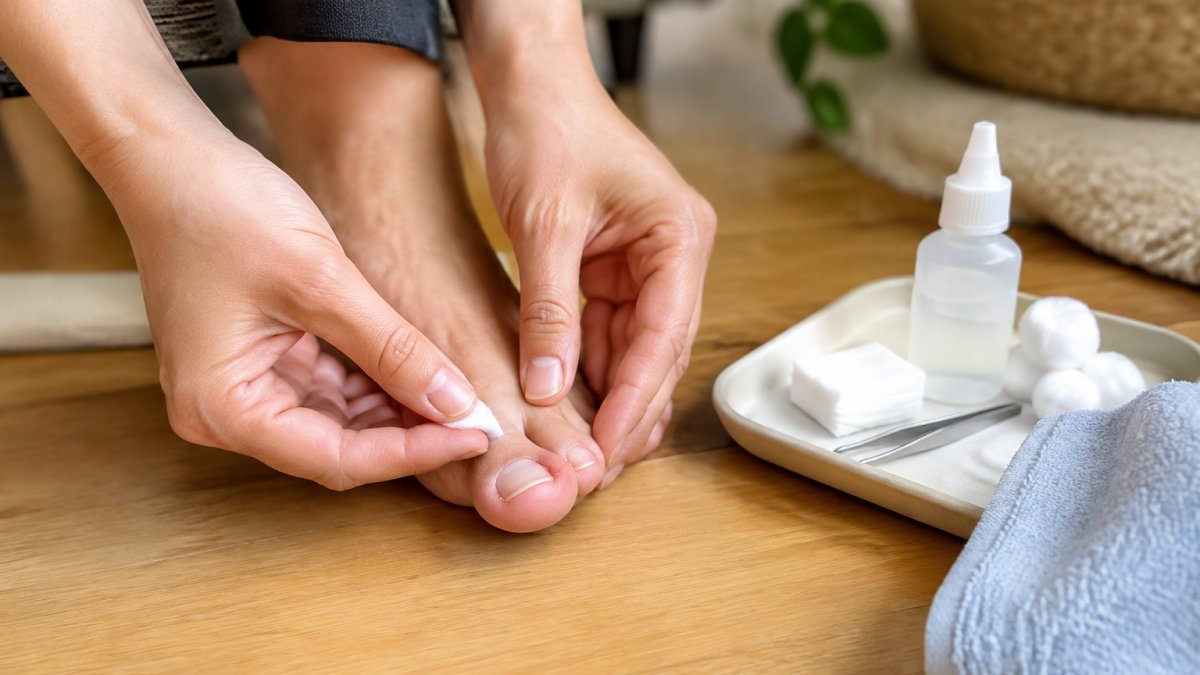
An ingrown toenail happens when the edge of the nail grows into the skin beside it. Most early cases improve with careful home care. Here is how to treat ingrown toenails safely. (Source: the CDC)
Soak the foot in warm soapy water for 10 to 15 minutes, two or three times a day, to soften the skin and ease tenderness.

Watch out: Never cut a notch in the nail or dig at the corner, this drives infection deeper. Trim nails straight across and leave the cuticle alone.
If pressure from a corn or callus is part of the problem, our guide to corns and calluses explains how friction is managed properly.
Signs of Infected Ingrown Toenail
Infection is where home care stops and medical care starts. Look for these signs around the nail:
- Growing redness and swelling
- Warmth in the toe
- Pus or yellow discharge
- Sharp pain that worsens
- Granulation tissue at the nail edge
Red streaks, fever, or chills are reasons to seek care right away.
Thick, yellow, or brittle nails may point to onychomycosis, so compare symptoms with our page on toenail fungus treatment options.
People with diabetes should consult a qualified professional promptly if they notice changes in their feet, since nerve damage and poor circulation can mask symptoms (the CDC).
Podiatrist Ingrown Toenail Treatment
When home care does not resolve the problem, a qualified podiatrist can discuss in-office treatment options for the nail.
Here is how the options compare:
- Home care: What It Involves: Soaking, lifting the edge, ointment; Best For: Early, mild cases
- Partial nail avulsion: What It Involves: Removing the ingrown edge; Best For: Need for urgent or immediate care
- Phenolization: What It Involves: Removing edge plus treating the nail bed so the nail does not grow back; Best For: Long term relief ingrown nails
- Surgical excision: What It Involves: Removing the nail edge with sterile technique; Best For: Recurrent cases
Our practice takes a conservative-first approach to foot and ankle care in Timonium and throughout Baltimore County. Our board-certified surgeons have served patients since 2006. Learn more about conservative foot and ankle care or request an appointment, or see our ingrown toenail treatment page.
Watch out: Avoid cutting out an infected nail yourself, since a non-sterile tool can spread infection.
An ingrown toenail that keeps coming back is a sign that home care is not enough. At Timonium Foot and Ankle Center, our board-certified team offers a conservative-first approach, in-office procedures when needed, and over 20 years of experience caring for feet and ankles. Get started with Timonium Foot and Ankle Center and get back to comfortable, pain-free steps.
Frequently Asked Questions
What is the fastest way to get rid of an ingrown toenail?
Home care generally involves gentle soaking and keeping the area clean. If pain, swelling, or pus appears, consult a qualified podiatrist for an individual assessment.
When should you see a doctor for an ingrown toenail?
Consult a qualified podiatrist if you have diabetes, poor circulation, or nerve damage in the feet, or if you notice signs of infection such as pus, spreading redness, or fever, or if pain and inflammation continue. A podiatrist can discuss suitable treatment options for your situation.
Do ingrown toenails heal on their own?
Mild cases may improve with general home care. Recurring inflammation of the same toe is a reason to consult a qualified podiatrist for an individual assessment.
 Add timoniumfootandankle.com as a preferred source on Google →
