


What a Podiatrist Does and When to See One
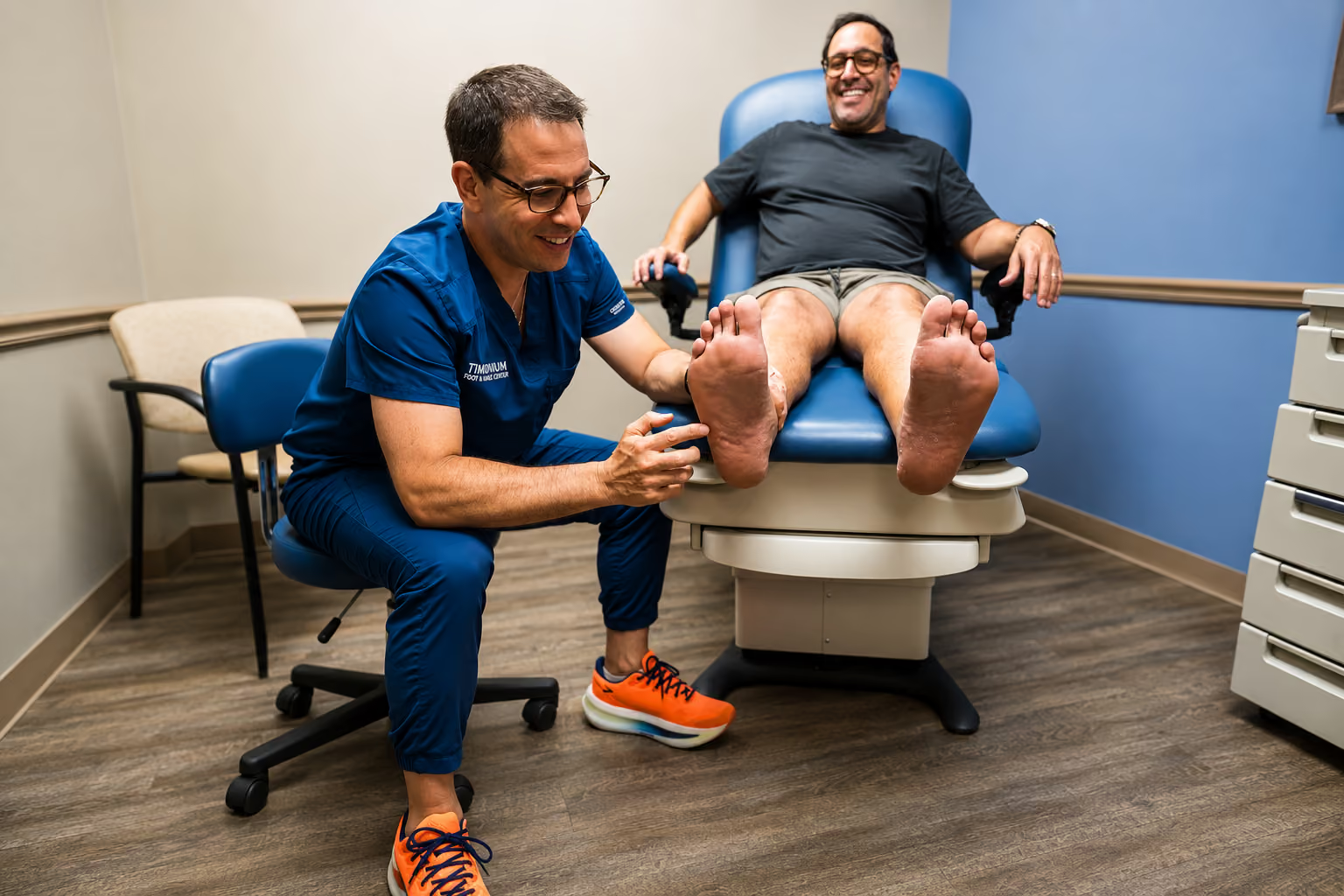


Your foot has been sore for a week. It hurts when you walk. You are deciding whether to call your family doctor, and wondering whether a podiatrist is the right call instead. This page answers that, along with what podiatrists actually do, which symptoms should not wait, and what to look for when choosing one.
What a podiatrist is
A podiatrist is a doctor of podiatric medicine, or DPM. It is the only medical training that focuses solely on the foot, ankle and the related structures of the leg. Podiatrists diagnose, treat and help prevent injuries, diseases and disorders in that region, and they also handle leg problems that are caused by foot and ankle conditions.
The foot and ankle are more complicated than most people expect. Between them they contain 26 bones, 33 joints and more than a hundred muscles, tendons and ligaments, along with a dense network of blood vessels and nerves. Expertise in that anatomy is what the training is for.
A podiatrist can perform surgery, prescribe medication and order physical therapy. Because many systemic diseases show early signs in the feet, podiatrists are also often the first to spot conditions such as diabetes, kidney disease or arthritis.
The training behind the title
Becoming a podiatrist takes four years of podiatric medical school after an undergraduate degree, followed by at least three years of hospital-based residency covering both medical and surgical training.
Board certification is a further step. It requires advanced training, documented clinical experience and a thorough examination. If a podiatrist is certified by the American Board of Foot and Ankle Surgery, that certification is specifically about surgical competence.
Many podiatrists then concentrate further, in sports medicine, pediatrics, wound care, diabetic care or surgery.
When foot pain should go to a podiatrist
Plenty of foot and ankle pain settles on its own with rest, ice, elevation and an over-the-counter anti-inflammatory. When a day or two of that does not change anything, it is worth being seen.
Some symptoms should not wait at all:
- Redness, swelling or increased warmth in the foot or ankle
- A change in the shape or appearance of the foot, skin or toenails
- A wound or sore that is not healing
- Any new bump, lump, mole, cyst or growth on the foot or ankle
- Numbness, burning or tingling
- Inability to bear weight
Growths on the foot are usually harmless, but not always, which is the reason to have them looked at rather than watched.
Anyone with diabetes, or with reduced sensation in the legs for any other reason, should have foot and ankle problems checked immediately rather than monitored at home. Loss of feeling means an injury can go unnoticed, and foot wounds can become serious very quickly.
What podiatrists treat
Pain may be coming from:
- Plantar fasciitis and heel spurs
- Arthritis
- Bunions
- Broken bones and stress fractures
- Ingrown toenails
- Shin splints
- Blisters
- Wounds or sores that will not heal
Unusual growths may be:
- Corns or calluses
- Neuromas, which are benign nerve enlargements
- Warts
- Heel spurs
Color changes, such as redness, paleness or a blue or purple tint, can indicate:
- Decreased blood flow
- Infection
- Vein problems
Skin irritation can indicate:
- Athlete's foot
- Gout
- Diabetic ulcers
Numbness, burning or tingling may mean:
- Diabetes
- Neuropathy
A change in the shape of the foot or ankle may point to:
- Flat feet
- Hammertoe
- Muscle or joint problems
Athletes and anyone whose work involves long hours standing or walking tend to need podiatric care more often, for sprains, fractures, tendinitis and plantar fasciitis in particular.
How to choose a podiatrist
Match the practice to your problem. Some podiatrists concentrate on children, some on sports injuries, some on wound and diabetic care, some on surgery. A practice that treats your specific condition regularly will give you better care than one that sees it occasionally. A practice that covers a wide range well is better still.
Check the credentials rather than the star rating. Look up where they trained, whether they are board certified, and in what. Then read recent patient reviews for a sense of how care is actually delivered, not as the deciding factor.
Ask about treatment philosophy before you book. A podiatrist who reaches for surgery first, before conservative options have been tried, is a different proposition from one who does not. Ask directly.
Use the first consultation to decide. You cannot judge a doctor from a website. An initial visit tells you whether they listen, whether they explain, and whether you are comfortable enough to be honest with them. That relationship matters more than most people allow for.
Care at the Timonium Foot and Ankle Center
The practice has served Timonium and Baltimore County since 2006. Dr. Jordan R. Stewart, DPM, is certified by the American Board of Foot and Ankle Surgery and treats adults and children, with in-office digital x-rays, ultrasound imaging, laser therapy for pain and toenail conditions, custom orthotics, sports medicine, diabetic foot care and surgery when it is warranted. Second-opinion evaluations are available.
To be seen, call (410) 560-2777 or request an appointment online.